Climbing ropes have evolved over the years, offering more and more options to choose from, thanks to the new technologies that have been introduced, making them extremely reliable in any situation. However, beginners in rock climbing or indoor climbing might find themselves not fully utilizing some of these new “features.” Here are the main characteristics that a “first rope” should always have.
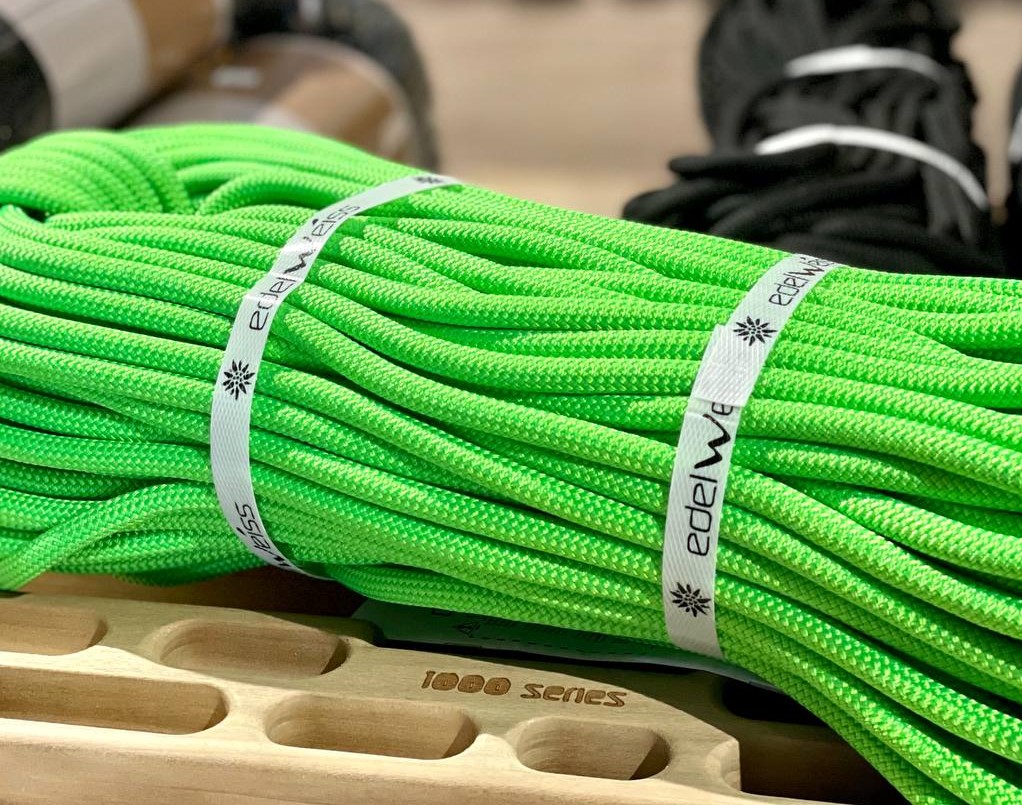
The Thunder by Edelweiss
Key Features to Consider When Choosing Your First Rope
You’ll likely use the rope both in the gym and on the crag, so you’ll need to find the perfect combination of weight, length, and abrasion resistance. These three characteristics also revolve around one of the most “problematic” aspects when choosing a rope: the diameter.
Let’s start with this: single ropes can be thin and light, easy to carry and clip, or thick and “reassuring” (a purely psychological factor). All single ropes, regardless of diameter, perform their function of cushioning falls and meet the safety standards set by the UIAA. However, the differences between an 8.5 mm thick rope and a 10.5 mm one are literally “tangible.”
Ropes 9.8 mm and Above
Thick ropes, with diameters ranging from 9.8 to 10.5 mm, give a sense of “solidity” and robustness. They inspire confidence, are generally easier to handle with assisted braking belay devices (although recent models are increasingly optimized for thinner rope diameters), and are inevitably more resistant to wear. If possible, make sure they have a high sheath percentage, which guarantees extreme durability, especially if you do a lot of top-roping. A 9.8 mm diameter rope is usually the most versatile, often used for very different climbing styles, thanks to its extraordinary functionality.
Thin Ropes
Thin ropes, ranging from about 8.6 to 9.7 mm, offer great lightness, a factor you’ll appreciate on long approaches, but they require extra care in their use. For instance, it’s advisable not to use them for seconding, a practice that always wears out the rope a bit, or to take multiple falls on the same end. You could say it’s the perfect rope for those who climb a lot on-sight: thinner models are often certified as both single and half or twin ropes, making them ideal for mountaineering as well.
When we talk about thin ropes, we always imply greater handling, an aspect highly appreciated during the first outings on rock, both for ease in tying knots and performing maneuvers, and for the lightness when passing the rope through quickdraws. However, if you mainly climb indoors, where you don’t need to walk for hours or perform maneuvers at anchors, you can forget about the weight issue and opt for the most resistant, solid, and reassuring rope you can find.
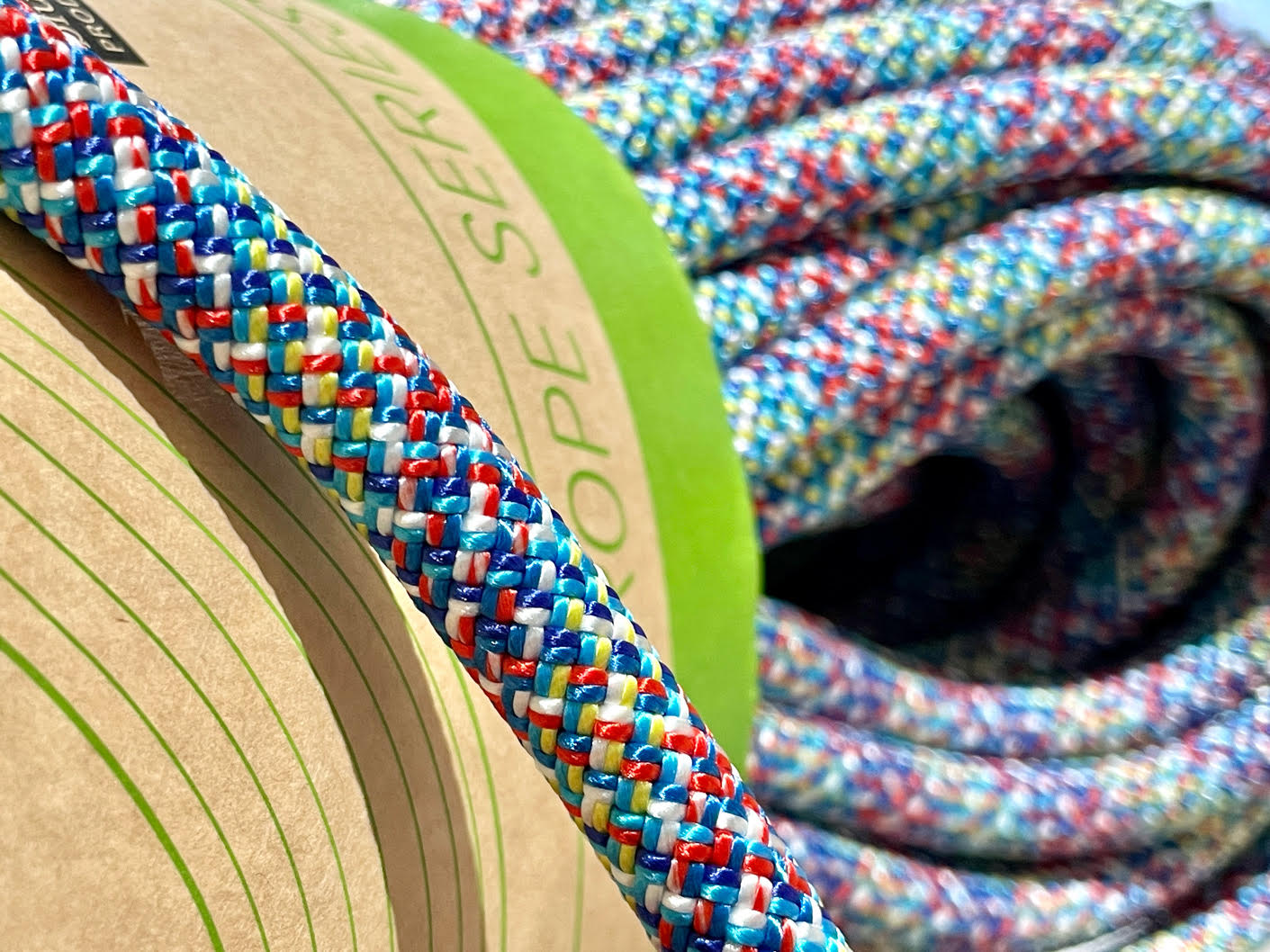
The Parrot by Edelrid
Indoor Climbing Ropes
If your approach to climbing is in the gym, and that’s where you’ll be doing most of your climbing, choosing your first rope becomes easier by keeping a few simple parameters in mind. The indoor climbing rope must first of all be abrasion-resistant, so with a good thickness and a high sheath-to-core ratio. Some models specifically designed for indoor use, like the Edelrid Boa Gym, combine abrasion and dust resistance with easy handling, giving you an excellent balance between the two main aspects of climbing on artificial structures.
The Importance of the Perfect Combination Between Rope and Belay Device
Another aspect to consider when choosing between different rope diameters is the type of belay device you usually use, and thus the rope diameters it is optimized for. If you don’t remember these parameters, you can find all the technical descriptions of the most commonly used belay devices in our online catalog.
The Ideal Rope Length
There are no “standard” rope lengths established for beginners, especially when it comes to rock climbing. However, we can recommend a rope around 60 meters long, which is sufficient for most indoor climbing gyms and suitable for a first approach to the crag. Even though there’s no rule stating that a beginner’s route can’t be 35 meters long, often when we start climbing, we already have numerous problems with technique, maneuvers, and mental challenges, so tackling routes longer than 30 meters might not be the best idea. In these cases, it’s best to get advice from more experienced climbers or instructors who frequent the crags and gyms in your area, or consult a guidebook with crags near you.

Edelrid Swift Pro Dry
Treatments Used in Rope Manufacturing
We’ve talked about abrasion resistance, which can be higher with a high sheath percentage in the rope, but almost all brands patent treatments that contribute to making ropes exceptionally resistant in various aspects.
Unicore: Durability and Longevity
Unicore, for example, fuses the rope’s core and sheath together, creating a much more durable bond against both stress and wear. Among the many treatments we present to you, Unicore is undoubtedly the most important for a “first rope.” Spending a lot of time hanging or not having much experience in climbing and material care can lead to ropes wearing out more quickly.
Treatments for Handling
Some brands, like Edelrid, have patented treatments that maintain excellent rope handling over time, such as ThermoShield. This way, the rope remains exceptionally supple, without stiffening, and is always pleasant to use. It can be considered a “plus” for beginner ropes, but not a crucial aspect.
Pre-Coiling
One of the real annoyances for climbers is the formation of coils as soon as the rope is “unboxed” after purchase. This has always required passing the entire length of the rope through your hands to completely uncoil it. Some brands have patented pre-coiling systems that allow you to use the rope immediately upon unboxing, a significant advantage that also impacts safety.
Water-Repellent Treatments
Water-repellent treatments are generally associated with mountaineering or ice climbing ropes, but they can actually be useful for anyone climbing in very humid areas. Some tests conducted on ropes from various brands have shown that water-repellent treated ropes are also more resistant to dust and dirt, and consequently, last longer. If you want to read our article on the topic, you can find it here: “Do Water-Repellent Climbing Ropes Last Longer?”
If you want to dive deeper into all aspects of ropes and the values you find on the labels, such as Impact Force or Number of Falls, here’s the link to our guide on how to choose a rope.
Cover photo: credits to Christian Adams