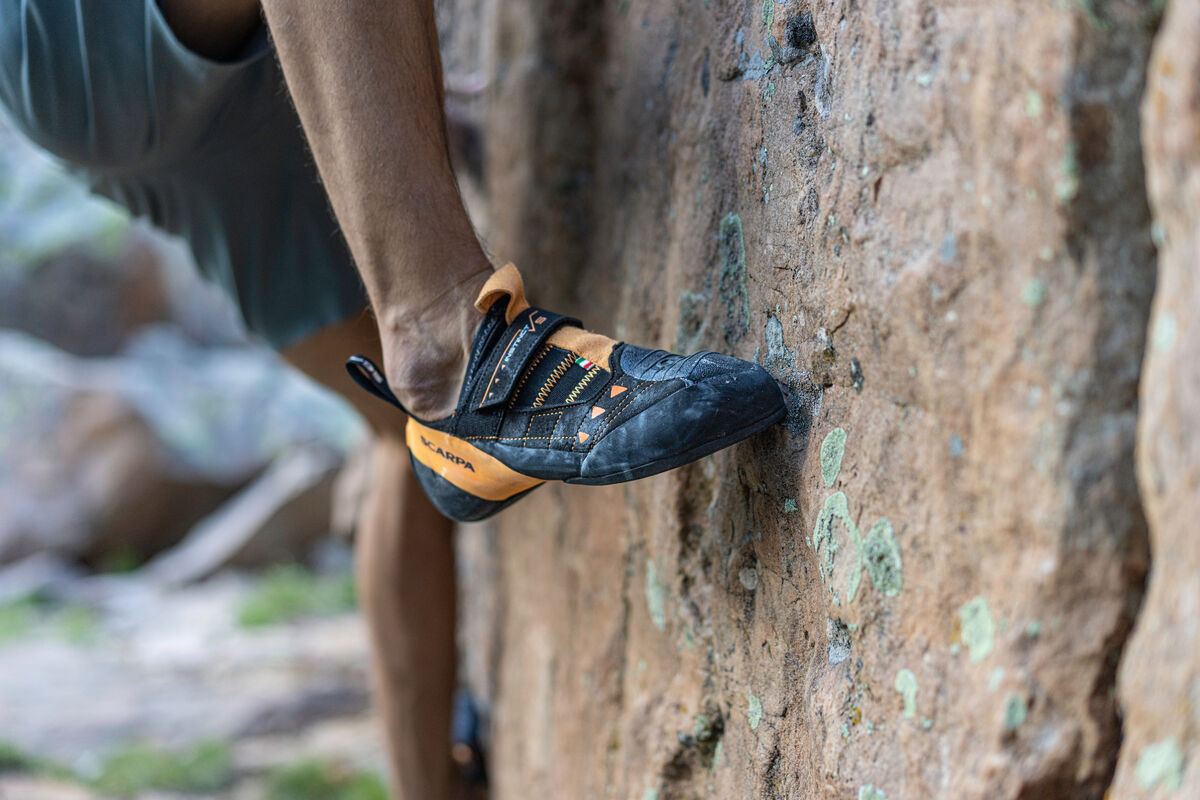
Climbing shoes are a piece of gear that every climber holds in high regard, often with a deep sense of devotion and affection. While our climbing ability depends on our physical, motor, and mental skills, it's undeniable that we often place our hopes in the miracle that a new pair of climbing shoes might bring—whether on a route, a boulder, or any project we're working on.
We learn from professional climbers, those we see in the most epic climbing videos: when you find the right shoe, you'll take it with you around the world and onto the most challenging terrains. But how are advanced climbers' shoes—those designed not necessarily for professionals—different from those meant for beginners?
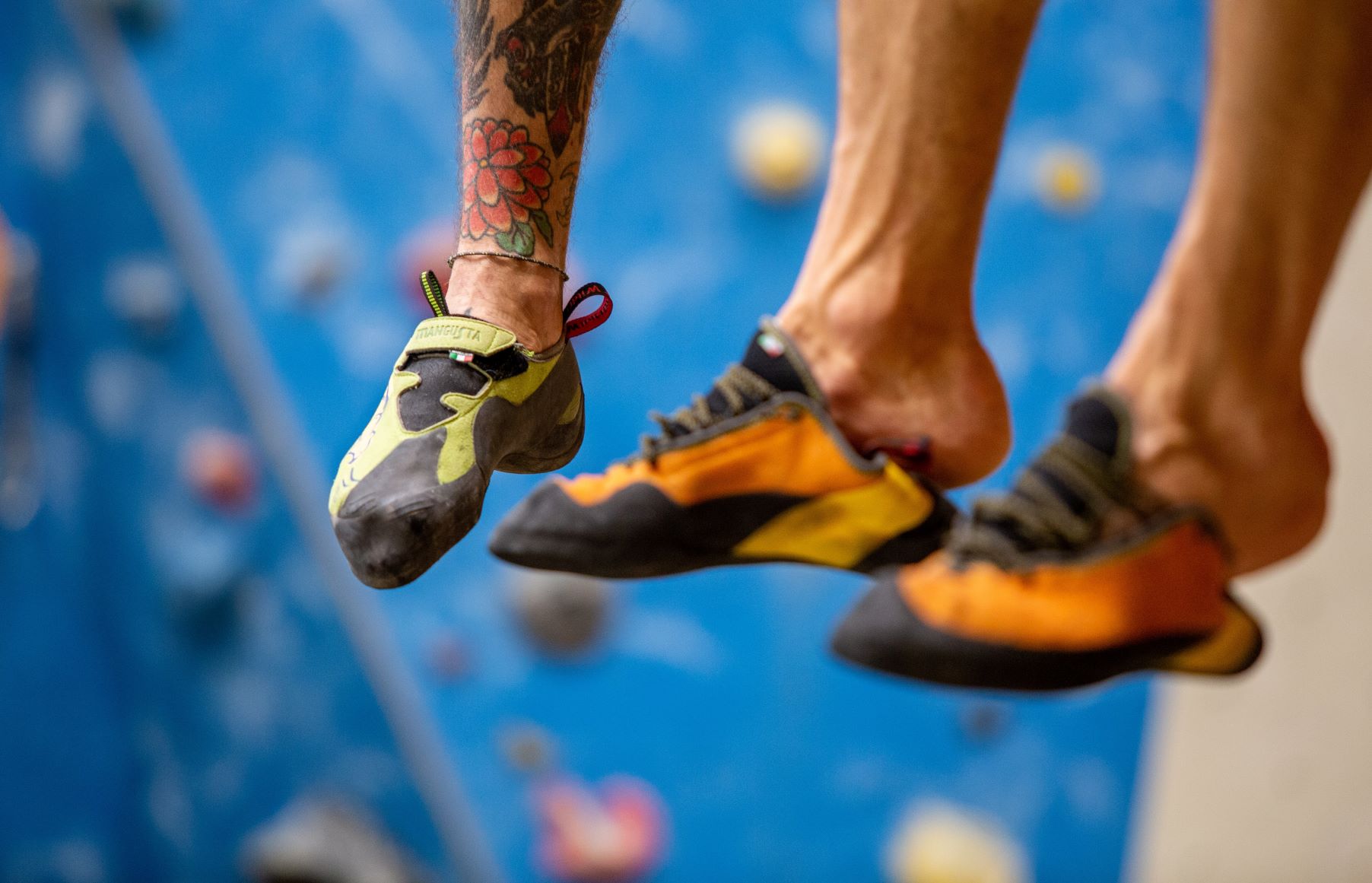
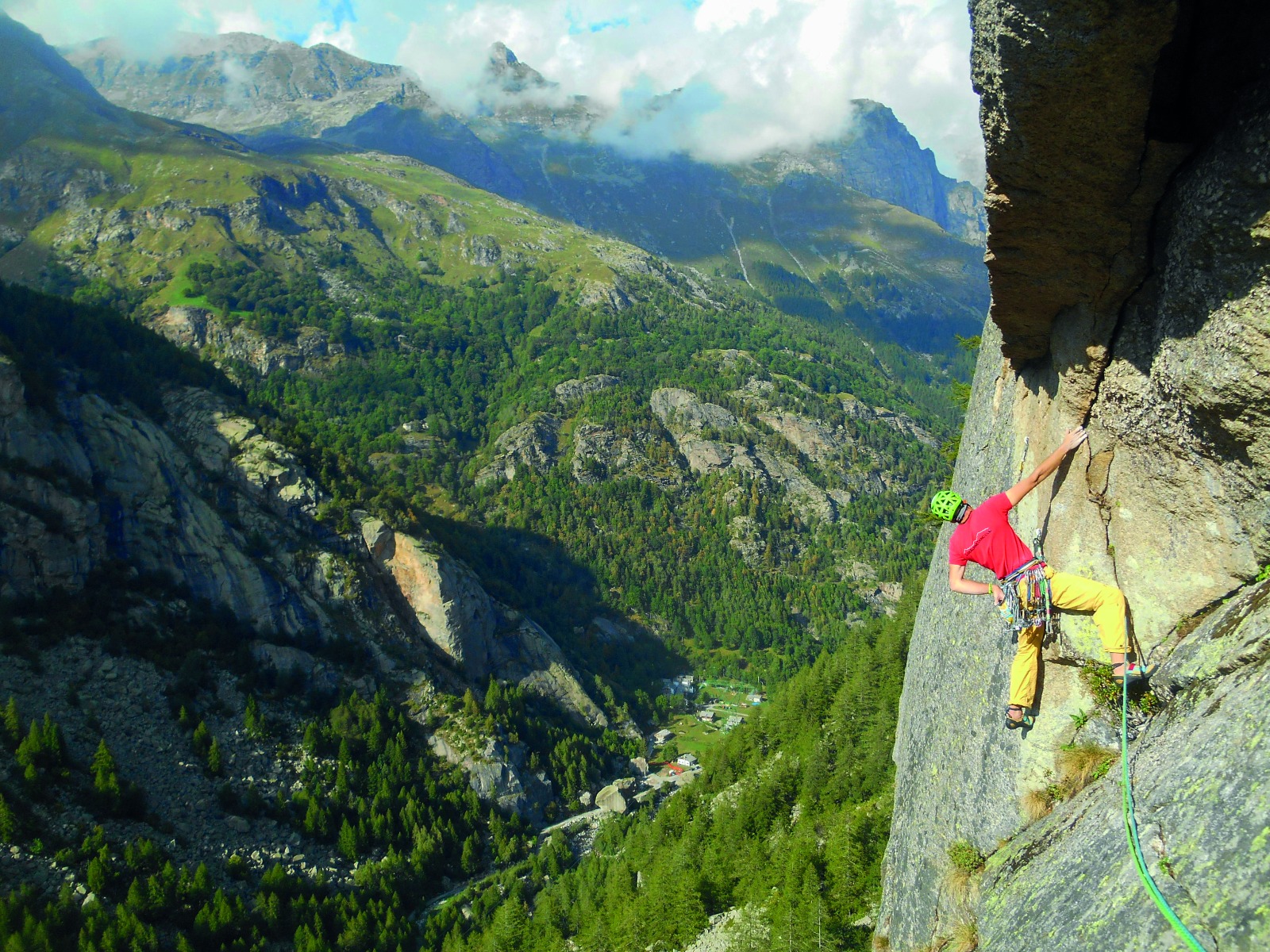
Photo by Wild Climb
The Superpowers of "Pro" Climbing Shoes
Although there are many differences between beginner shoes and those for more experienced climbers, they are not always strictly separated into distinct categories. Much depends on the terrain where they are used, as there is a big difference between shoes for pro boulderers and those for extreme trad or big wall routes.
With that said, it's clear that the "superpowers" of these shoes depend entirely on our ability to make the most of their features. Take softness, for example, typical of shoes for extreme boulderers: it helps us smear our feet on the slick granite surfaces, allows for extreme twisting during heel hooks, and gives us freedom of movement in those dynamic moves where we need that explosive power from our feet.
It's evident that strong foot muscles, developed over years of climbing, allow us to "handle" this structural softness without feeling excessive fatigue in our feet, calves, and legs after just a short time. At the same time, a shoe that excels at hooking won't be helpful if we haven't first learned the proper technique for effective heel hooking.
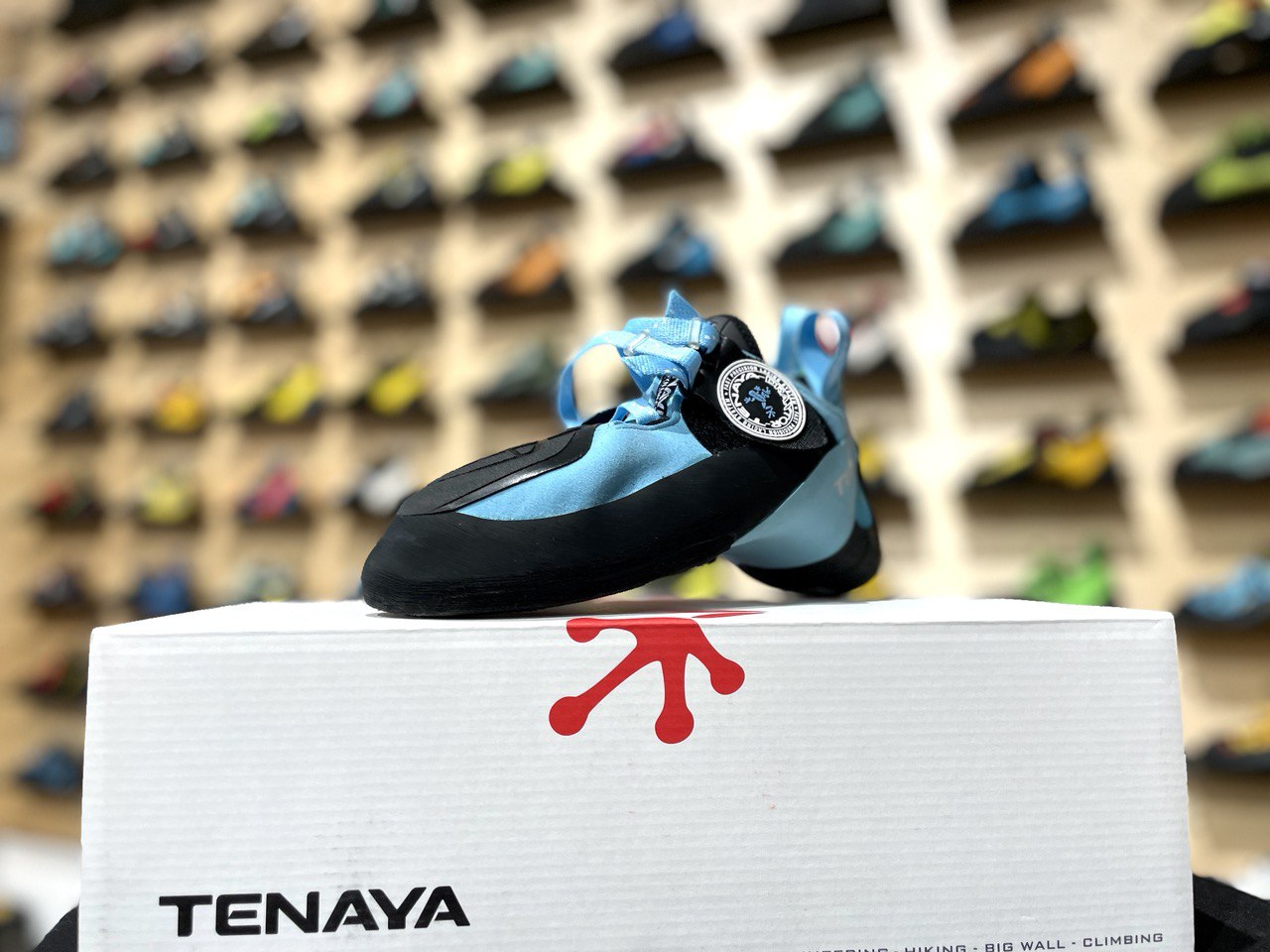
Indalo by Tenaya
Shape Differences: Beginner vs. Advanced Climbing Shoes
While the difference in stiffness or softness is something you can only feel by wearing the shoes, you can often see the difference in shape at a glance. Beginner climbing shoes are almost an "intermediate step" between regular approach shoes. Their shape is only slightly asymmetrical, following the natural shape of the foot, and the sole is flat—these are the same characteristics found in children's climbing shoes, where it's crucial not to restrict natural movement or the growth of young feet.
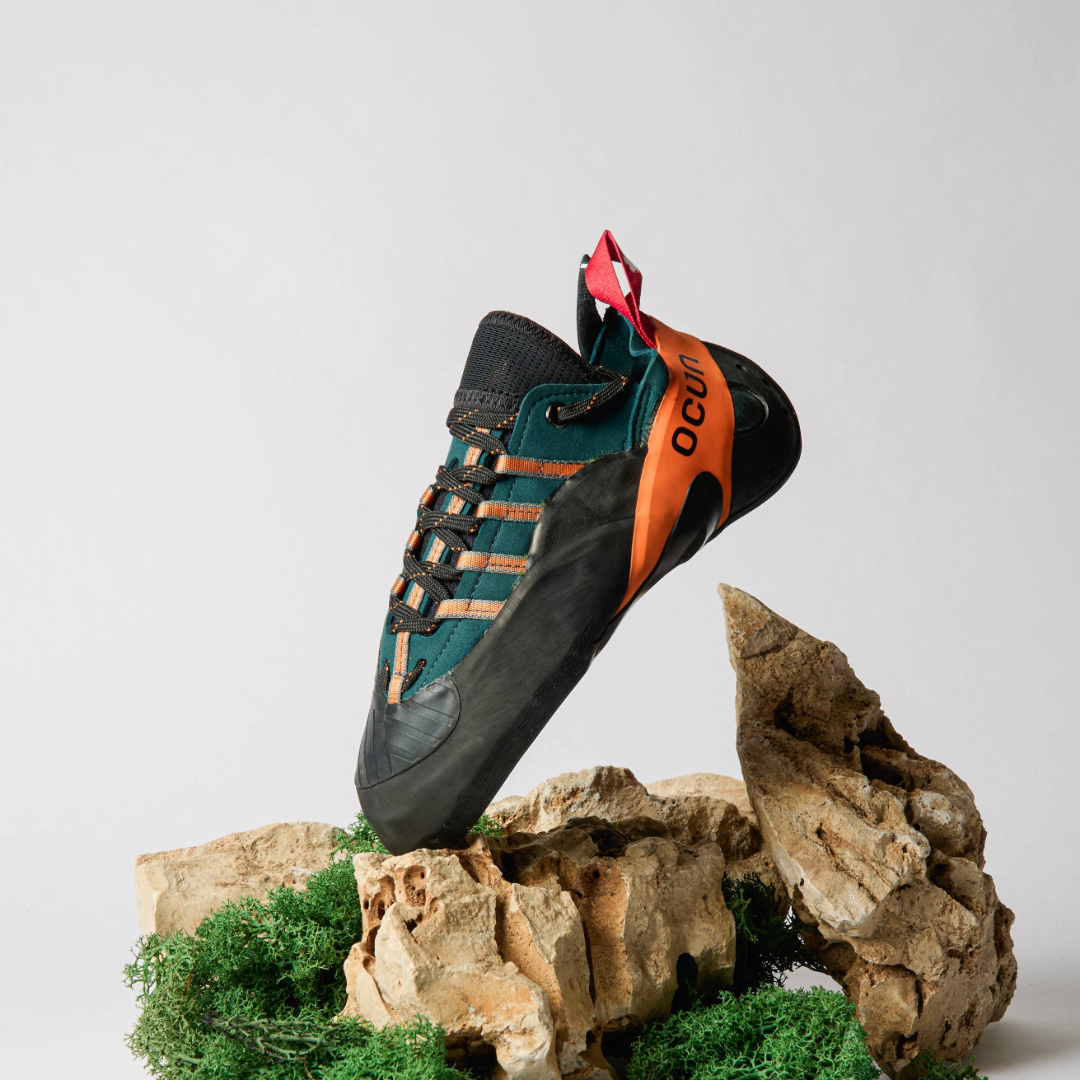
In contrast, shoes for more advanced climbers are highly curved, with a very asymmetrical sole that concentrates the load onto the toes, particularly the big toe. Asymmetry, curvature, and aggressiveness are the three features that transition a shoe from being very comfortable and pleasant to wear to models that you can't keep on for longer than necessary during a climb (if you want to delve deeper into the difference between curvature and asymmetry, check out our previous article).
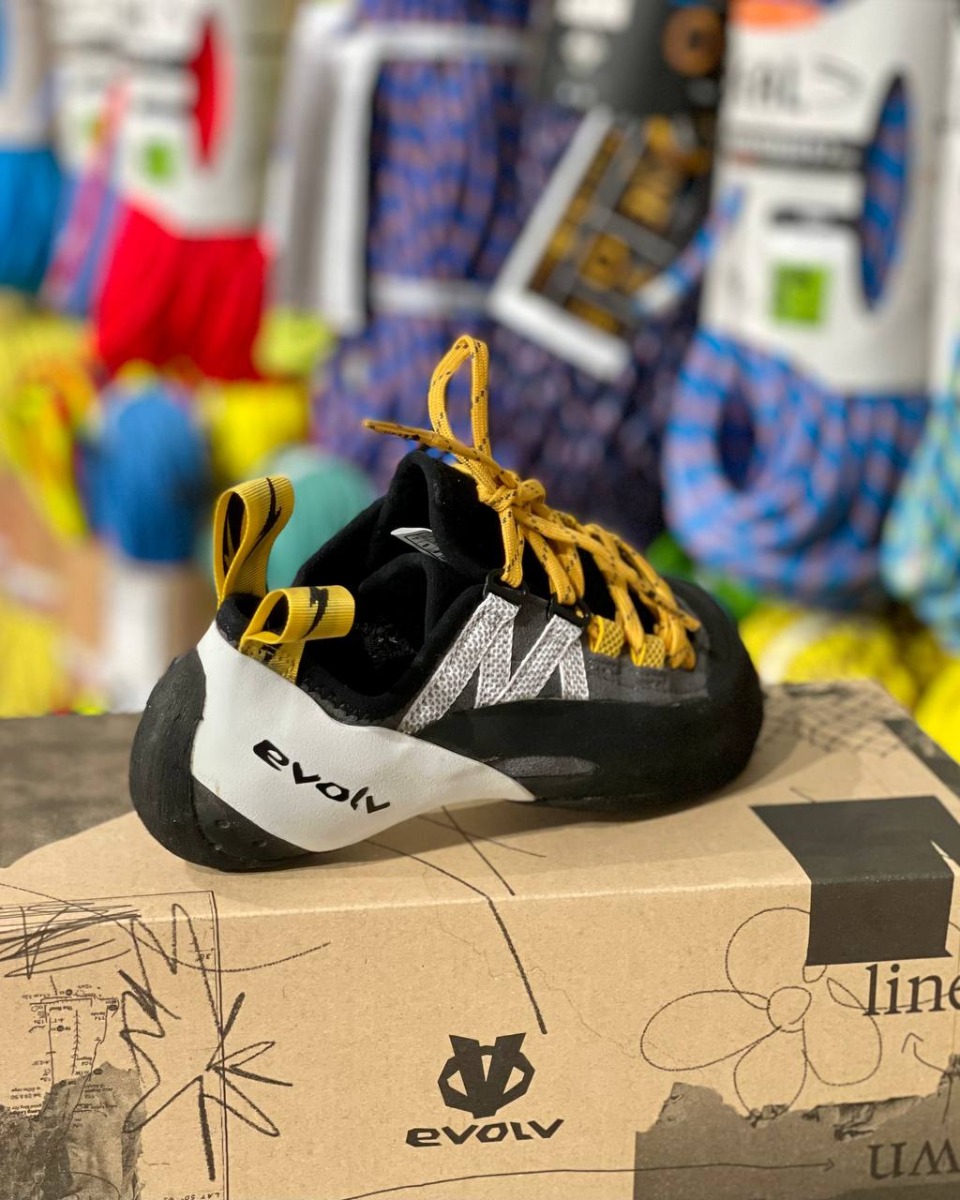
Evolv Shaman
The Half Sole Issue
When opting for a pair of soft climbing shoes, typically for climbers with a few years of experience, you'll often come across a wide selection of shoes with a "half sole." This construction enhances the softness of the shoe—meaning flexibility rather than comfort when worn. If you take a pair of shoes with a full sole and a rigid structure, you'll find it hard to bend them to make the toe touch the heel (bending downwards).
You'll feel a completely different sensation if you try this test with soft shoes, which will offer almost no resistance to bending. This is due to the "absence" of part of the sole, leaving the central part of the foot without resistance to any movement (twisting, downward pressure, etc.).
To give you an idea of how light these shoes feel, they are often referred to as "unstructured": all that is missing in terms of support in these highly sophisticated models must be compensated for by your experience and strength developed over the years.
The Sole: From 5mm in Early Models to 3.5mm in Competition Shoes
The soles of climbing shoes deserve a chapter of their own, and in fact, you can find a detailed comparison of different rubber compounds in one of our previous articles. Beyond the distinction between half soles and full soles, the thickness and stiffness of the rubber determine in many ways the most suitable terrains for each model. A 5mm sole will be more resistant to quick wear, due to imprecise foot placement or wearing the shoes for an entire gym session. A 3.5mm sole might make you worry about durability, but the impeccable technique you'll have developed by then will help you avoid wearing them out too quickly, and it will provide much greater sensitivity, especially on small footholds.
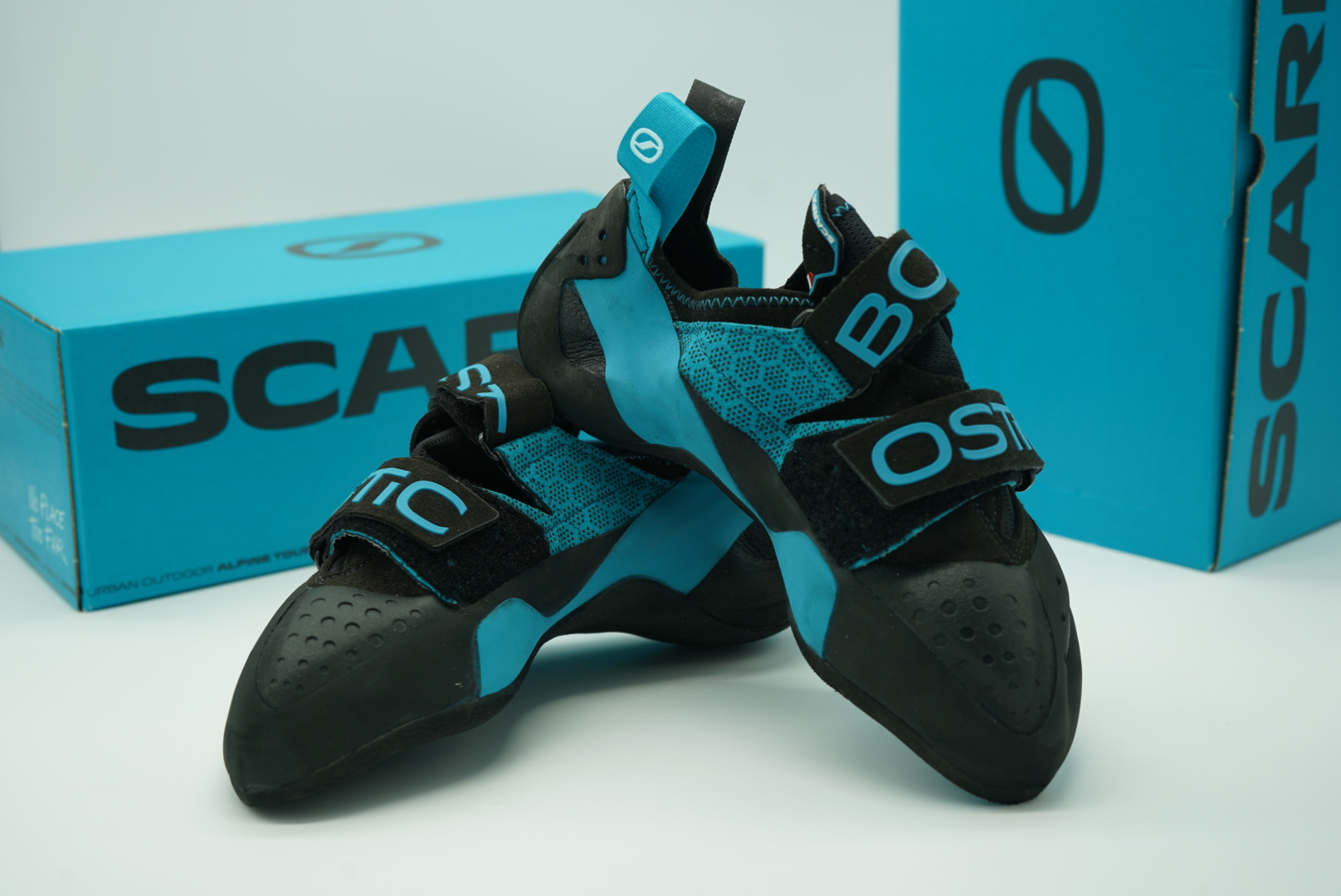
SCARPA Boostic
Fit: Comfort vs. Performance
It's logical to think that beginner climbing shoes offer comfort that you'll have to give up as you improve and instinctively seek more performance-oriented models. Comfort, in addition to the shoe's shape and sole, is also influenced by the materials used—mostly leather in beginner models, with soft elastic or foam inserts in the tongue area, and a comfortable fit even around the heel. Moreover, shoes designed for intermediate and advanced levels increasingly incorporate more tensioning systems that shift the climber's weight toward the toe of the shoe.
For each specific model of climbing shoe, and considering all the characteristics we've discussed so far, it's up to us to decide how much to "size down" compared to our normal shoe size. For example, La Sportiva recommends choosing one to three sizes smaller, while brands like Five Ten suggest even going up a size or staying the same as your regular shoes: for every half or full size down, we know we'll lose comfort but gain performance.
We look forward to seeing you at Oliunìd to choose your next pair of climbing shoes!