
Place
10/02/2025
Five tips to enjoy bouldering in Fontainebleau
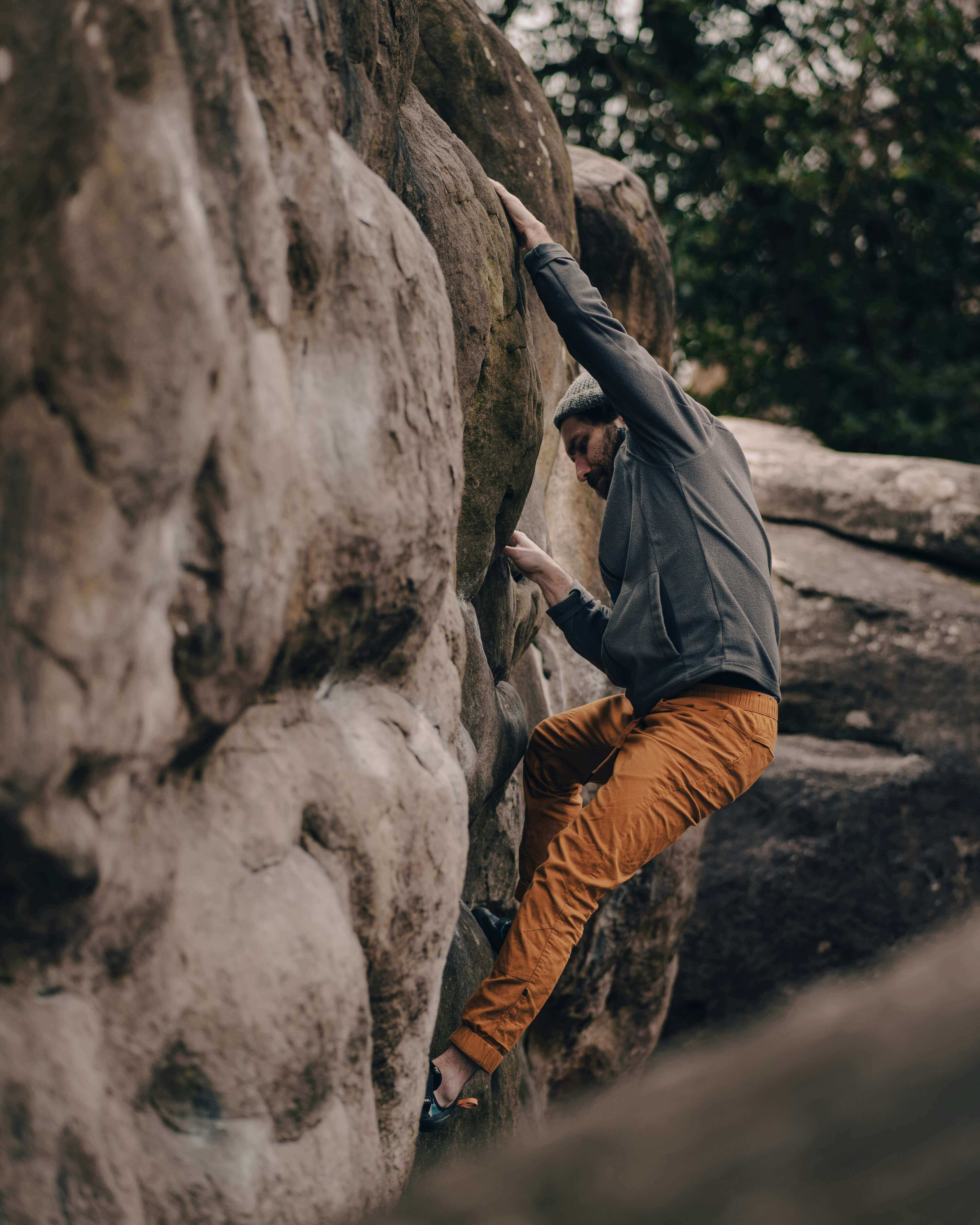
The unmistakable shapes of the Fontainebleau boulders
Fontainebleau is not only the quintessence of bouldering with its absolutely perfect boulders, flat falls on sandy terrain and compression moves on perfect slopers: Fontainebleau is above all the origin of bouldering, both in Europe and worldwide.
It was here, at the end of the 19th century, that a few experimental climbers with a particularly avant-garde vision of climbing began to explore the boulders of the forest, creating a completely new practice of verticality.
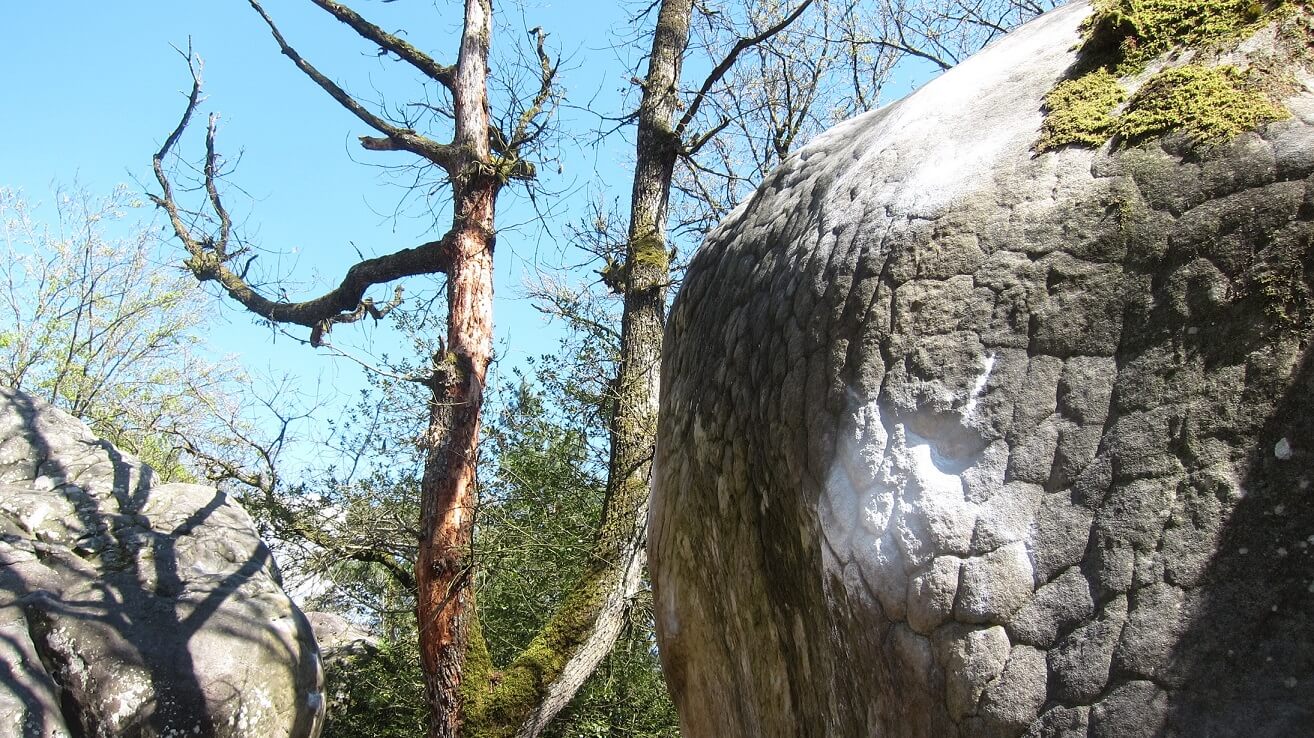
The uniqueness of the Fontainebleau Rock: a heritage to be preserved with awareness
Historical notes about Fontainebleau
The development of bouldering in Fontainebleau has brought small revolutions in many respects. One of the turning points that came from this magical place was, first of all, the approach: unlike the first absolute enthusiasts of this discipline, who practised bouldering in a completely individual way, Fontainebleau saw the first experience of climbing boulders with friends, in a convivial way, as an activity with pure fun as one of its objectives.
The first areas to be explored were, for obvious reasons, those closest to the Bois-Le-Roy station: Bas Cuvier, Rampart and Merveille. The Larchant area was also explored, because of the imposing boulders on the sandy seabed, and the Elephant sector, which is still very popular, was born.
After the two world wars, Bleau's exploration resumed at full speed, first giving the world La Marie Rose, the first 6A passage, and then reaching higher and higher difficulties, such as the first 6B with Stalingrad and the first 6C with Quartrième Angle. The growth of this bouldering paradise continued until it crossed the French and European borders.
Even today, every year, world-class climbers and absolute beginners come for the first time, return or settle down for months at a time in the outskirts of Paris to try out these fabulous passages that have made bouldering history.
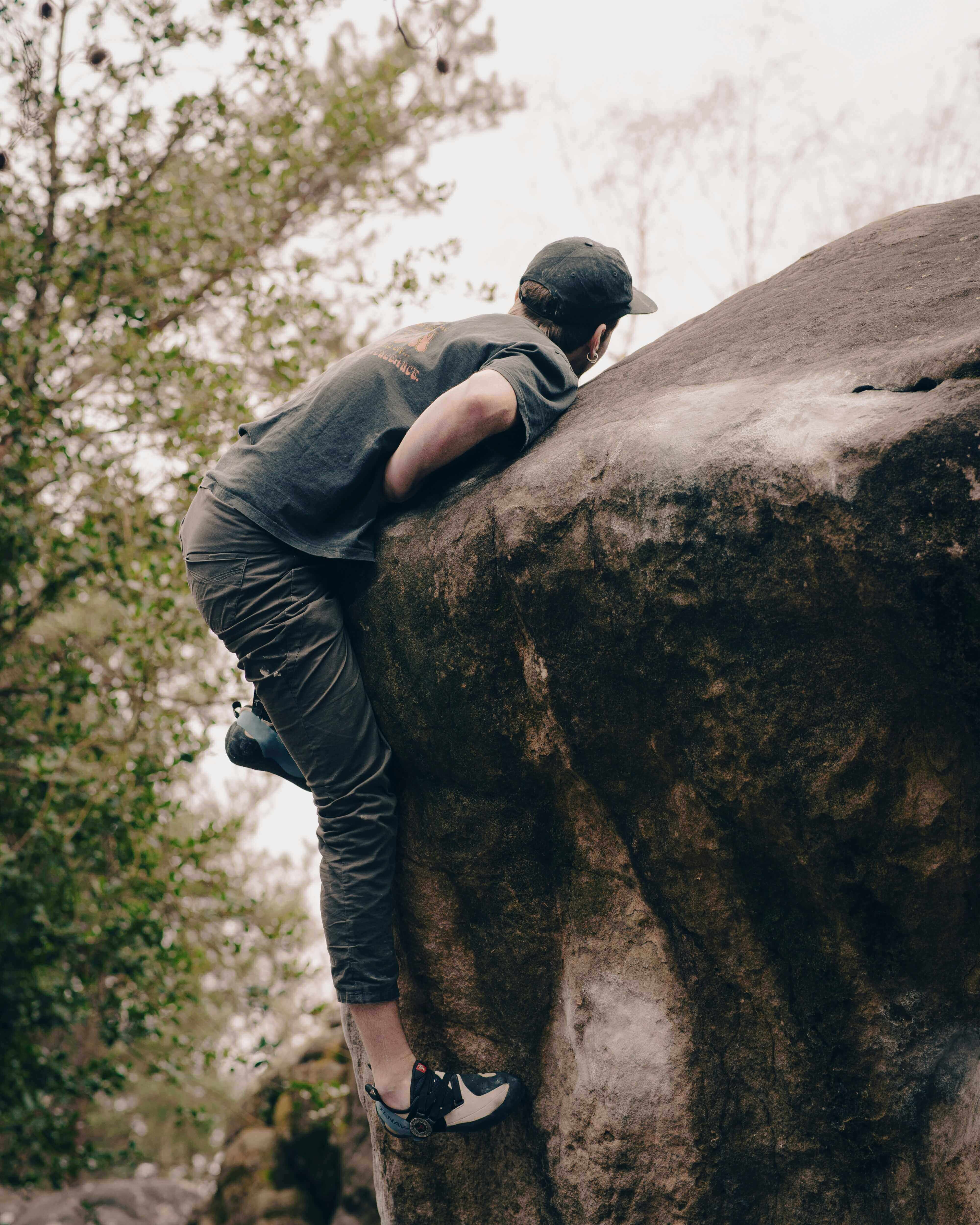
The scary mantles, typical of Font. Photo by Jules Kassas
Our tips to go bouldering in Fontainebleau
Choose the right guidebook
Fontainebleau is a vast area, made up of sectors that are very far apart and there are many rocks. There are just as many guides that present the area from different points of view (by difficulty or by area) and it is therefore essential to choose the one that best suits your needs.
The Dutchman Bart van Raaij has published two very practical guidebooks divided by grades: the first contains almost 4000 problems of grades 5 and 6 (in two volumes), the second selects as many from grade 7 upwards. The guides are in English and have recently been republished with many new passages.
On the other hand, if you want to get an idea of the most beautiful passages in Fontainebleau, whatever your level, you can choose the Bleau à Bloc guidebook, a compendium of the best in the area. Published by Versante Sud and written by Jacky Godoffe, it also has the advantage of being in Italian, which is not an insignificant aspect, especially when it comes to describing how to get to the car parks and areas that require a minimum of orientation.
When to go bouldering in Fontainebleau
Given the variety of environments in which the boulders of Fontainebleau are found, it is possible to climb almost all year round, choosing the most favourable exposures according to the season. Most of the boulders are located on these typical Font sandy areas, exposed to the sun: although climbing in the middle of winter can still be a little "chilly", the period from autumn to spring is undoubtedly the best.
Some boulderers, who are not bothered by the heat at all, manage to climb discreetly even in summer, finding shelter from the heat of the plains by immersing themselves in the vegetation that surrounds the most hidden sectors.
In our article 'Five sectors to climb in Fontainebleau', you will find a description of some of the most classic areas and the best time to visit them.
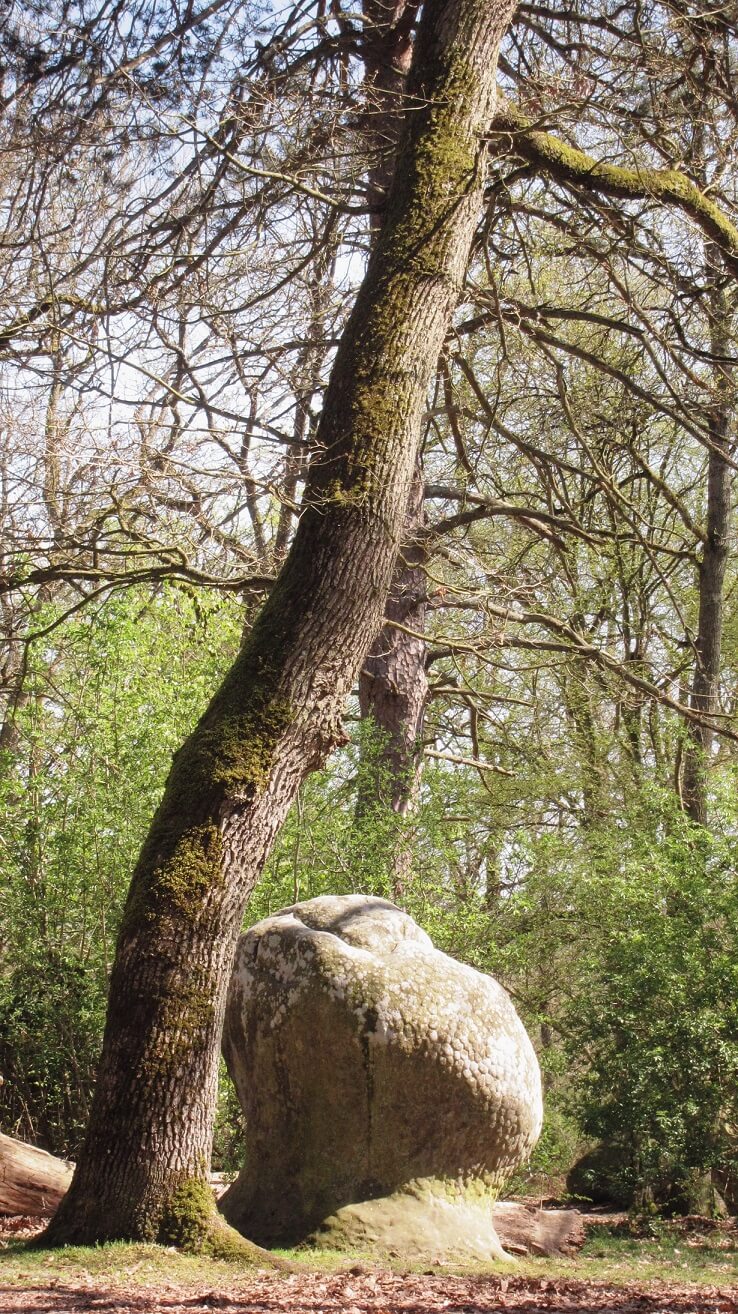
Fontainebleau, enchanted forest
How to use brushes and chalk
Not all bouldering areas have the same history and environment. Some bouldering areas, such as Magic Wood, were discovered and developed with a huge amount of clean-up work. Without the improvements made by climbers, these places would probably still be beautiful (and somewhat magical) abandoned forests. Then there are areas such as Albarracin and Fontainebleau, which are important from an archaeological and historical point of view and are loved not only by Spaniards and French, but by the whole world. So much so that they have been declared World Heritage Sites by UNESCO.
Families and people who have nothing to do with the world of climbing come here to walk, and if we really don't want to give them the right to see these places as unspoilt as possible, without pieces of tape on the ground, marks on the rocks and signs of our passage of any kind.
But it is not just a question of living with others, it is also a question of preserving as much as possible the environment in which we - presumably - want to continue climbing. The rock of Fontainebleau is particularly fragile and suffers much more than other types of rock from the constant brushing of the holds and the layers of magnesite that overlap year after year.
Some passages have already been irreparably damaged by the - sometimes excessive - use of brushes.
Learn the art of cleaning your shoes
The real Bleausards are unmistakable: even today, some historical figures arrive at the boulders not armed with a crash pad, but with a towel or a mat. This allows them to remove the sand from under their shoes, which can ruin their footing irreparably, and is one of the good habits to adopt in order to preserve the area as much as possible. If you don't have a doormat, the thin Edelrid Sit Start II mat or another equally thin model could be a good solution.
In any case, we advise you not to walk around in your slippers between the boulders and then go for a try: the soft, sandy terrain can make you want to keep your slippers on longer than you should. Bringing a pair of slippers that are easy to put on and take off can be a great way to avoid making this very serious mistake.
Bring climbing shoes comfortable enough for long sessions on the rocks
If you're heading to Fontainebleau, you'll want to bring your 'high performance' climbing shoes with you, as you're looking forward to testing yourself on the most legendary boulders we've all heard about. The most likely scenario is that you will spend long days trying to do as much as possible, ignoring common sense when it comes to recovery breaks, rest days and energy-optimising 'strategies'. That's why, personal preference aside, it's always better to have a pair of full-soled shoes to keep your feet and calf muscles from getting too tired.
Furthermore, most of the boulders in Fontainebleau require a technical and precise stance, which can be improved with stiff shoes.


