
Climbing is usually considered a well rounded sport that builds evenly every muscle, but that is not always the case. There are multiple disciplines in climbing, each shaping different muscle groups. When talking about climbing, we used to refer almost exclusively to outdoor sports climbing, but nowadays things have changed: there are lots of boulderers, speed specialists, and indoor climbing athletes‒ and their body shape varies according to the discipline they practice the most.
The perfect body for a climber
The classic climber’s body type is lean with strong upper body muscles, specifically lats and trapezius, as well as biceps and forearm flexors. Climbers’ legs are normally thin: until a few years ago, climbers avoided training their legs intentionally to save some overall weight.
But not all climbers meet this stereotype: there are a lot of athletes out there who choose to train their whole body more evenly. For example, boulderers tend to include specific leg training alongside their upper body training routine. Modern competition boulder setting, at times very similar to parkour routes, requires high performance and athletic preparation: athletes need to jump and be extremely coordinated, resembling gymnasts. The same goes for speed climbers: athletes need to be extremely strong to perform those explosive and dynamic moves on the wall!
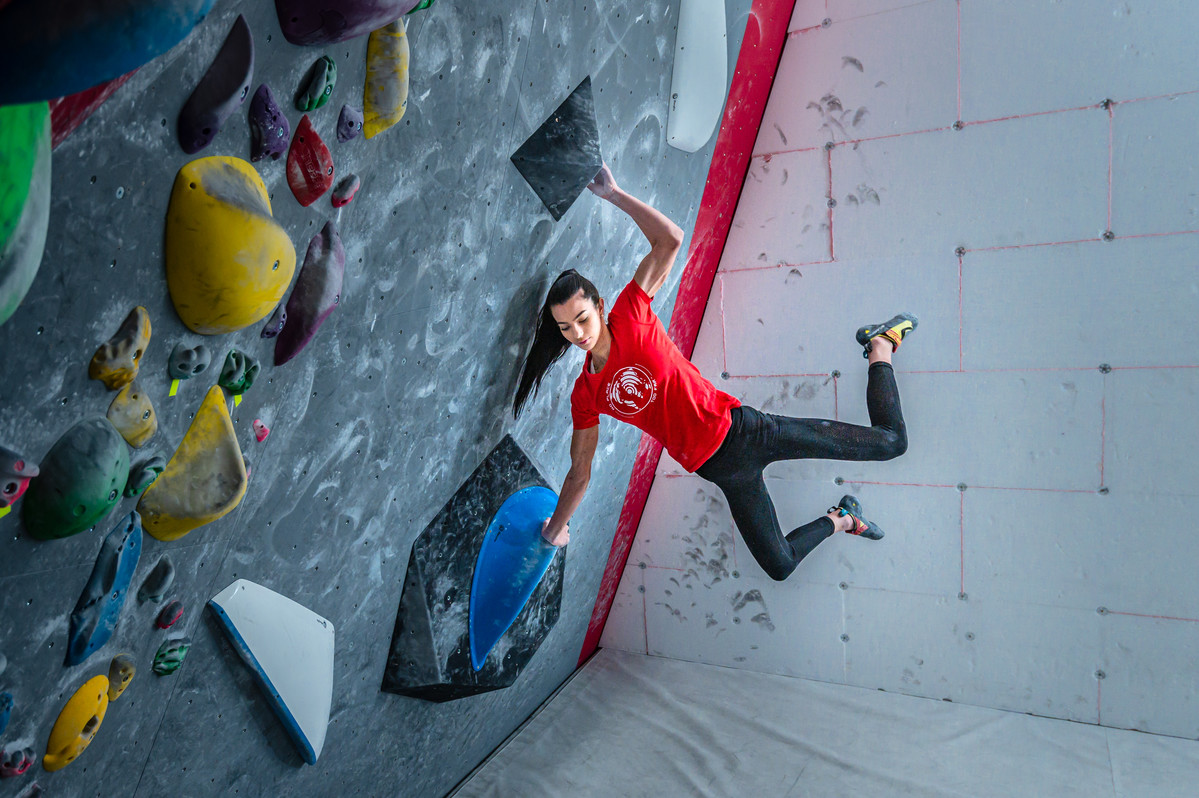
The new training methods lead to a well-balanced physique. Photo by Tristan Hobson, by courtesy of SCARPA Climbing
The new climbing training methods
This shift towards more balanced training depends also on modern training technique developments: old school climbers used to train mostly with weights, while nowadays athletes and climbing enthusiasts alike tend to prefer suspension workouts. This makes a huge difference in terms of muscle development. Instead of working on isolated muscle groups, suspensions allow a more complete training, involving all muscles to improve stability and control.
The old training methods have been replaced by a more complete approach, favoring balance and technique and using the body as a “weight” while performing the exercises. This approach is proven to be more efficient and overall balanced.
Cover image from IFSC Media Gallery


