
Quickdraws, like ropes and harnesses, are part of the gear we rely on to safely climb. Therefore, it is worth taking the time to make an accurate choice based on the intended use.
Quickdraws consist of two carabiners connected by a sling: here is how to navigate the various technical characteristics.
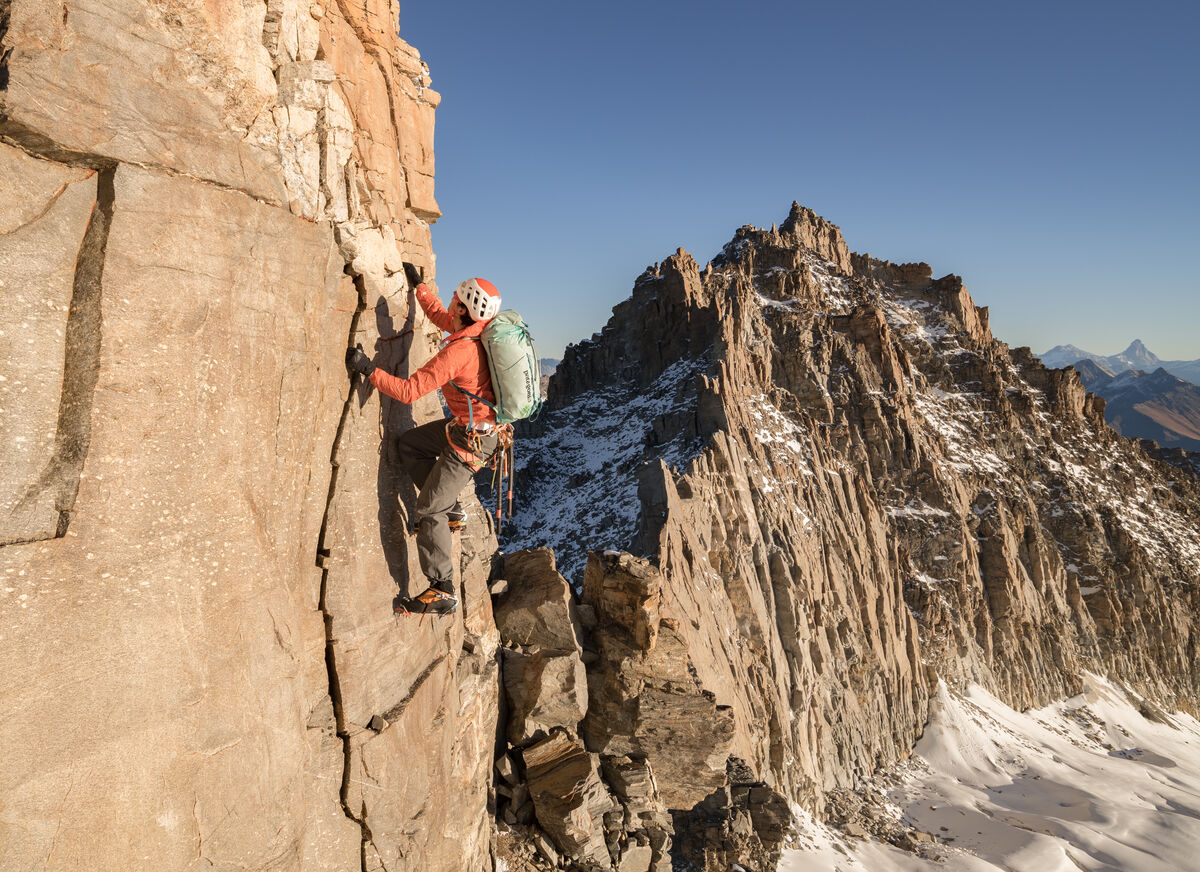
Carabiner gate
It is one of the aspects that catches the eye most easily and therefore one of the first to be taken into consideration: in front of a beautiful wall of quickdraws, we easily identify those with a wire gate from those that are more "solid" with a full and reassuring carabiner. Beyond aesthetics and weight, the type of gate fit better to different uses.
Solid Gate-Solid Gate
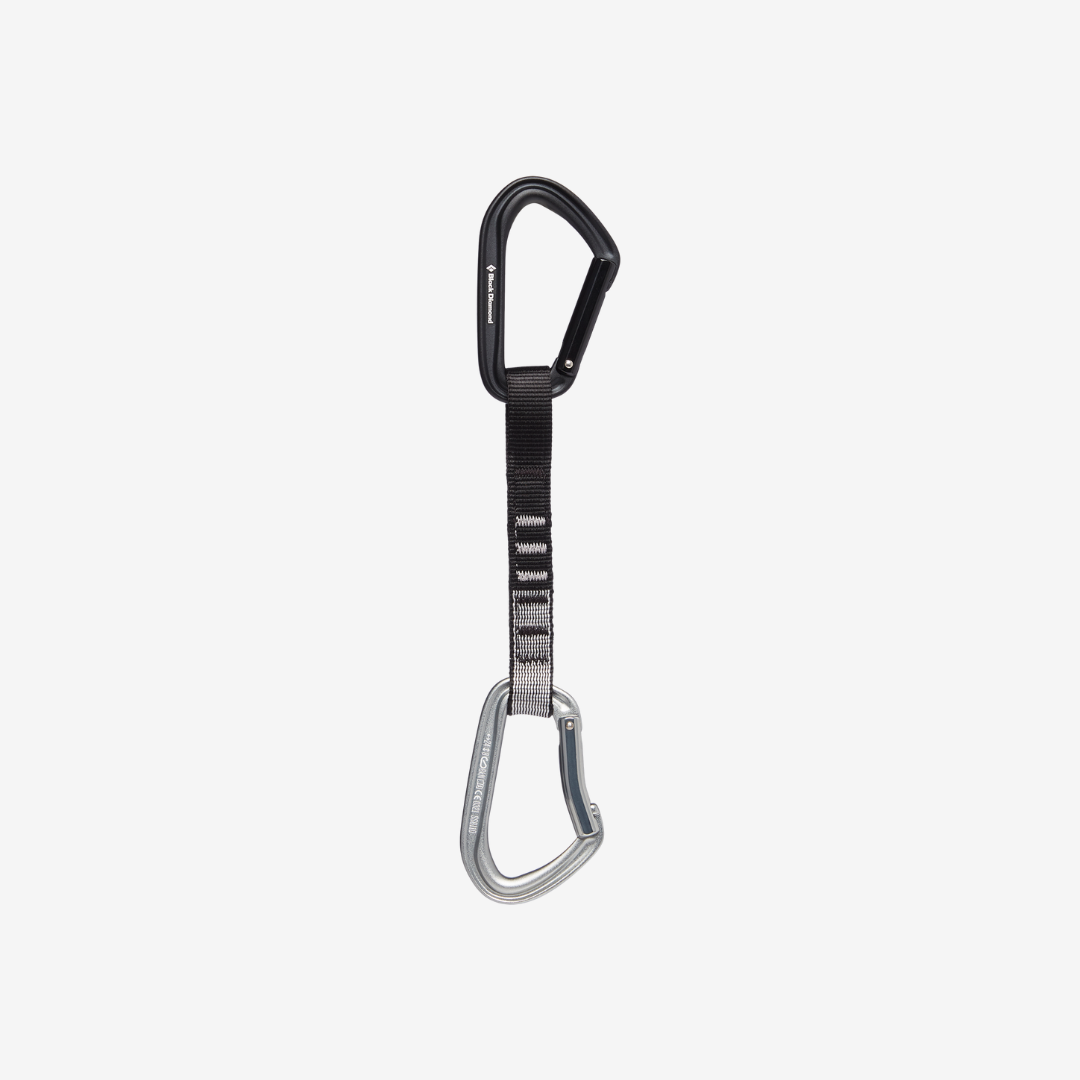
Often this type of gate goes hand in hand with the "straight gate" and "bent gate" combo. They work well for climbing in situations where weight is not a priority and where we rarely find ourselves in extreme cold conditions, which could affect the material. The quickdraw should always be placed with the straight-gate carabiner anchored to the bolt; the bent-gate carabiner is used to more comfortably accommodate the rope while clipping.
This type of carabiner is ideal for beginners as it is easier to handle, especially when passing the rope through. Its disadvantage is that it has a higher probability of opening when subjected to impacts and vibrations. For this reason, every brand has patented systems that mitigate this risk, from the Keylock found in Black Diamond and Camp to the Catch-free system from Climbing Technology.
Solid Gate-Wire Gate
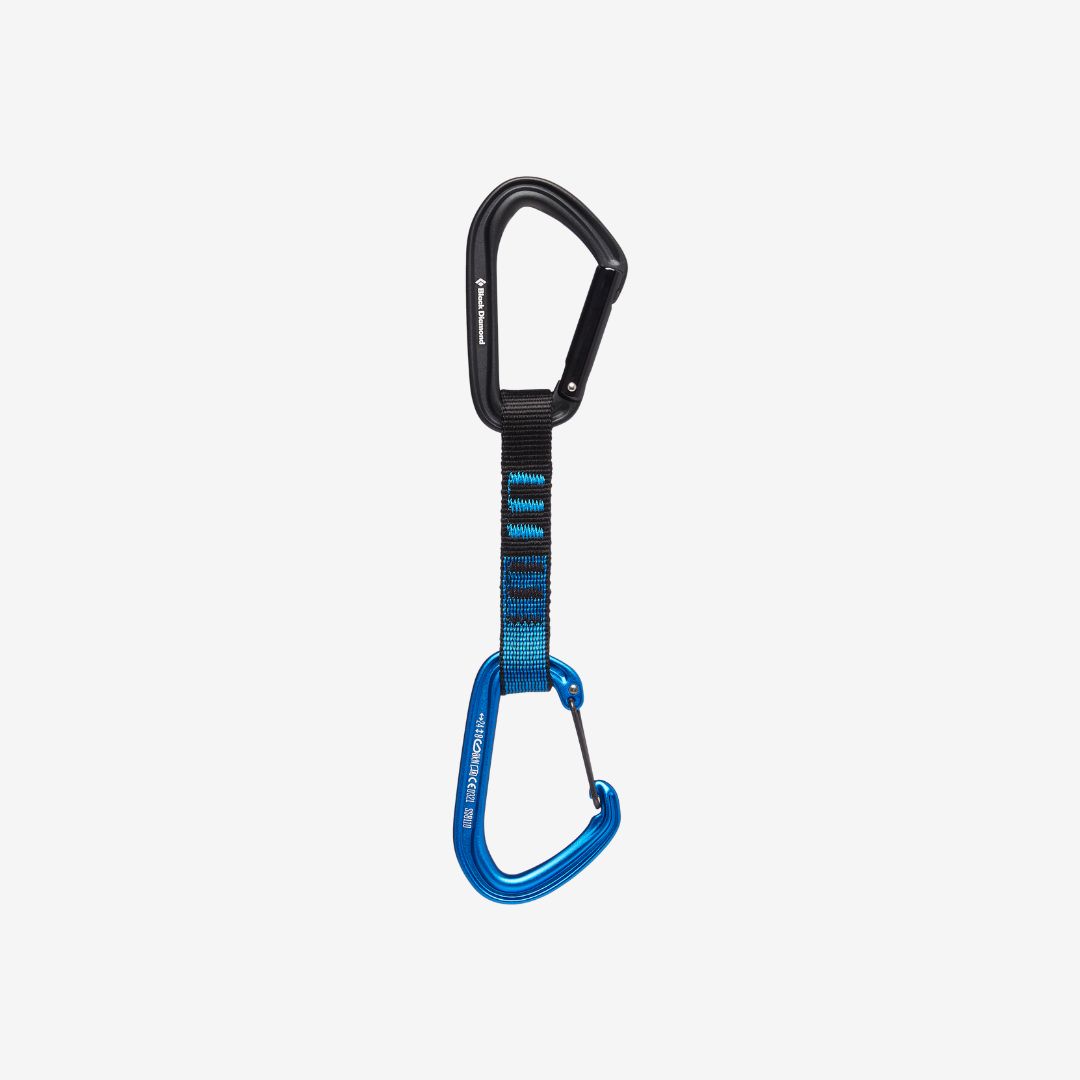
When we have both types of carabiners, the one with the full gate should be attached to the bolt anchor; the wire gate, which is part of the carabiner where the rope passes through, saves a few grams in weight. Having less mass on the gate has two advantages: the first is that it doesn't freeze (unlike the full gate), making it perfect for mountaineering or climbing on snow and mixed terrain; the second is that vibrations will less stress rhe gate (without delving into the physics of mass and movement), greatly reducing the risk of it to open.
Wire gate - Wire gate
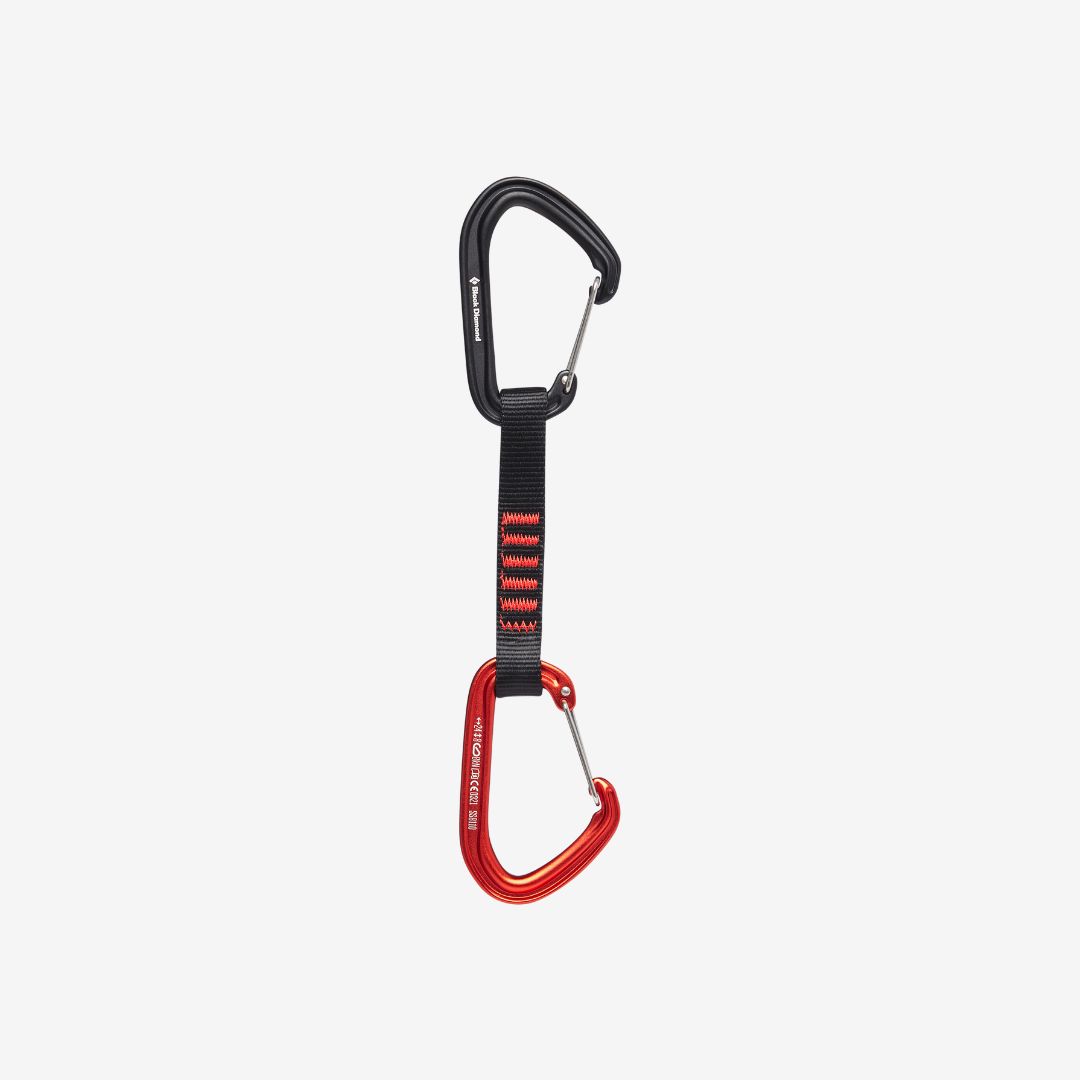
These are the lightest quickdraws on the market, a highly sought-after characteristic by mountaineers and by multi-pitch climbers. They can be appreciated in any situation where every gram counts, including here onsight climbing. Although they may seem optimal from every point of view, they may not be recommended for beginners as they are slightly less immediate to handle.
Sling material
Nylon
This material is by far the most used for the production of slings and ropes: it is durable, affordable, and certified for the function it must perform. It has excellent elasticity that allows for better absorption of impact from falls, hence extending the life of the gear itself.
Dyneema
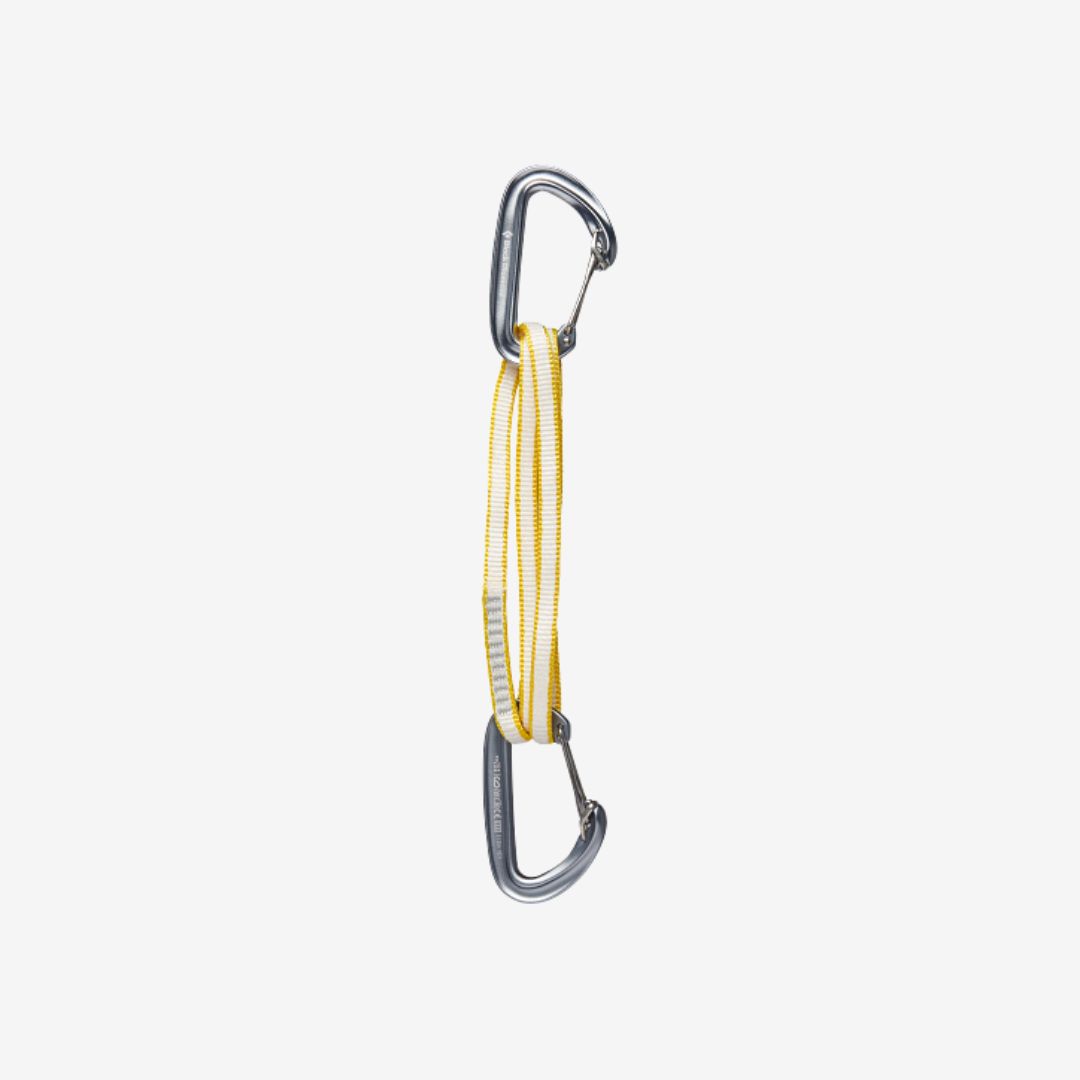
If nylon is the standard, Dyneema is excellence! It incredibly resists to wear and tear, weather, dust, and abrasions and truly excels when used in high mountain settings, where wear factors are extremely high. Of course, it is also lighter than nylon and contributes to a higher price. Thus, it is recommended for those who need to make the most of its characteristics.
Weight
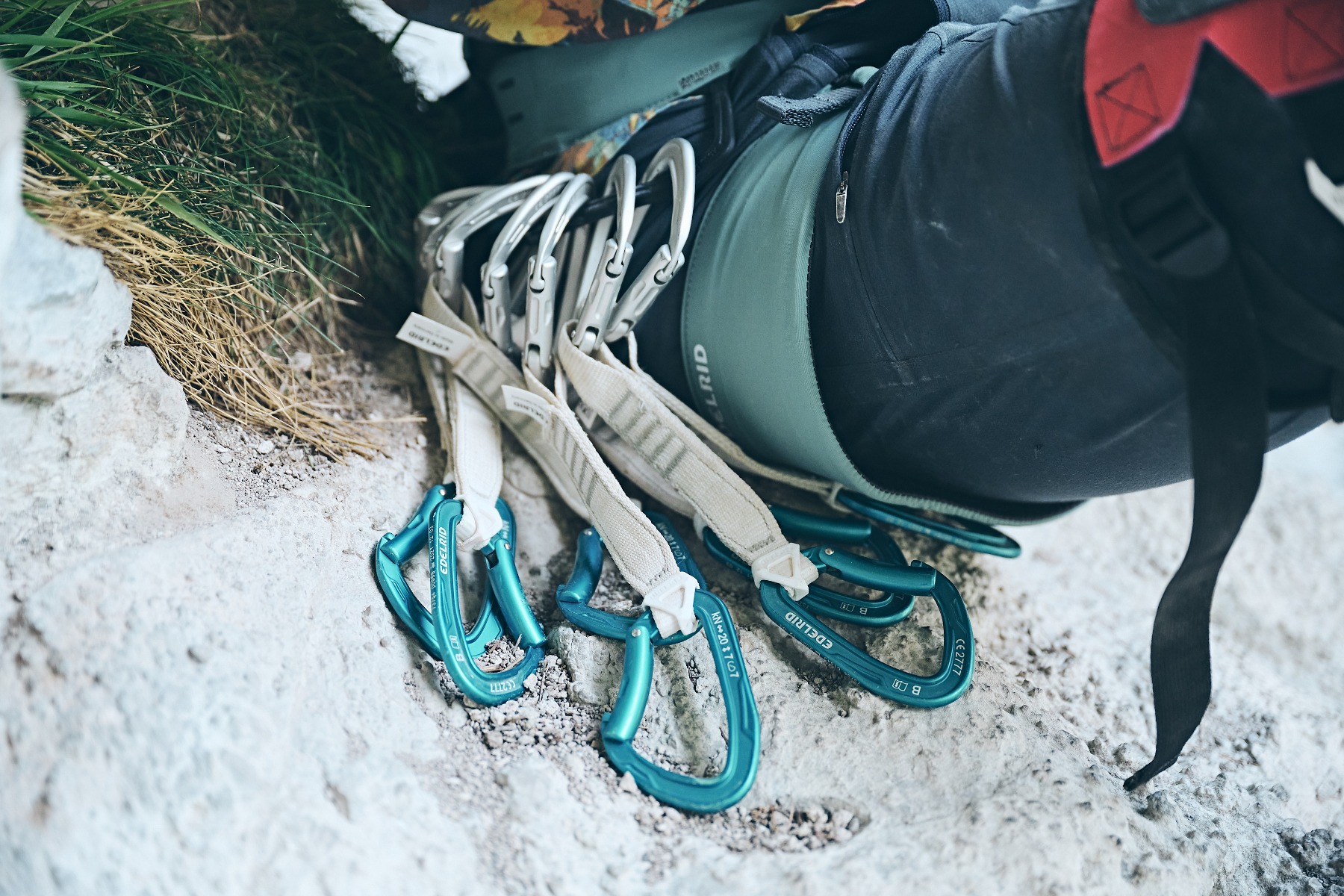
The weight of a quickdraw ranges from a minimum of 50 grams to a maximum of 290 grams and represents a numerical synthesis of the characteristics listed so far, namely the type of carabiner and sling that make up the quickdraw. This is an extremely important factor for those who carry a huge amount of equipment, such as alpinists, multi-pitch climbers, or trad climbers.
Sling length
In general, all quickdraws come with at least a couple of length options, ranging from ten to about twenty centimeters. When possible, it's good to have a kit with quickdraws of both lenghts. To not overly affect the final weight of the quickdraw, a longer sling usually corresponds with a narrower width, and vice versa. Long quickdraws are more comfortable for those who climb in strong overhangs or alpine routes, but they can also be useful in those crags with slightly overhanging walls: the longer sling reduces the possibility of creating angles that make the rope slide with difficulty, creating dangerous friction. They are almost mandatory in traditional climbing, where they also have the important function of not exerting too much pressure on the protection to which we are anchored.
Width and thickness of the sling
Inversely proportional to the length, the width of the sling is crucial when we want to eliminate slack, when we don't feel like clipping, and we want to grab the quickdraw over our head or in other similar situations where we need something comfortable to grab on to quickly. A wide sling is almost always also thick, around 20 or 25 mm, and ensures that the quickdraw will hardly twist on itself.

Major axis resistance
Here we enter that family of parameters that we look at with great interest as we buy the quickdraws, but of which we quickly forget when we are at the crag in a rather precarious situation. Quickdraws should always be anchored to the bolt in the "correct" position (refer to the Petzl site for further clarification), or with the gate perpendicular to the ground. A fall in this situation involves stress on the major axis, which is the one designed to absorb major impacts. The standard is a minimum of 20 KN, but almost all quixkdraws start at 22 KN and up.
Minor axis resistance
When the quickdraw rotates in the bolt and it remains - by mistake - with the gate parallel to the ground, we are in an extremely dangerous situation. In this case, a fall would stress the minor axis, which bears a much lower load than the major axis. It is unrealistic to hope that this eventuality will never happen: sometimes the quickdraw moves because of the vibrations and rotates in the spit. Therefore the greater the resistance value is, the bigger is the chance that the quickdraw can withstand the stresses (always better not to fall into this situation!).
Open gate resistance
If a quickdraw with a 90% rotation creates a dangerous situation, a clipping to the bolt with a not perfectly closed gate is potentially disastrous. His ability to bear a fall decreases a lot, risking not to tolerate such an impact. It is very rare, but sometimes it can happen that the gate remains attached to the bolt or that it does not fully close because it is extremely worn (situation not so unlikely when quickdrawa are left on the routes for decades).

Rubber fastener on the quickdraw
The rubber fastener is an insert that is placed between the sling and the carabiner of the rope side, and it has the function of keeping the carabiner in position when it is stressed by a fall. It helps to have an extra safety about the correct positioning of th carabiner, but it affects the final price of the product especially when it is placed inside the sling itself.
Quickdraws set
A complete quickraws set made of about ten pieces, but we can increase it if we want to have a combination of short and long quickdraws. The complete sets obviously have an affordable price when compared to the purchase of individual pieces: in addition to the most classical sets of ten, you can also find five or six quickdraws sets.
Outdoor pictures by Edelrid Mediencenter
WARNING: This article is for informational purposes only and does not purport to explain exhaustively the correct functioning of the various tools mentioned, so please refer to the respective user manuals.


