
The climbing harness is part of that equipment that we use for our personal safety and therefore must always be perfectly functional to use. When we talk about sport climbing, we refer to low harnesses with fixed or adjustable thighs depending on the models. Most companies produce slings in various sizes, also providing tables with the main measures, but it is always very important to try them before "enlisting" them in our cliff equipment.
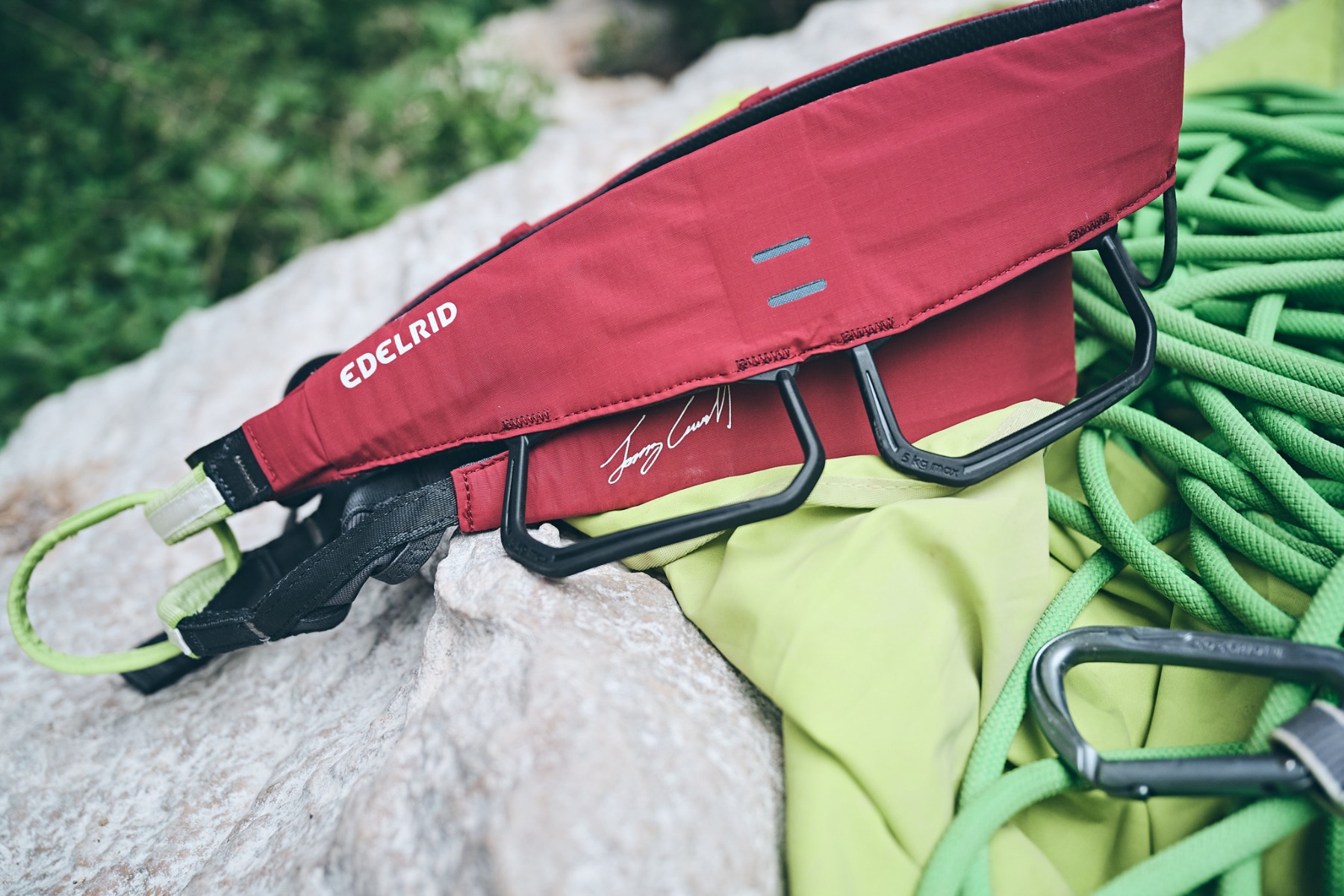
Edelrid Sirana Tommy Caldwell harness
How do we wear a harness?
First of all we try to become familiar with the right direction of the harness and the various loops of slings and thighs that are created once we take it out of the case. We unroll the slings that seem to turn on themselves (usually those of the thighs) and we make sure to have it straight in front of us, without curls or crosses. For those who are at the first outings on the cliff, it can be difficult to understand if the thighs are straight or inverted: we can solve this doubt by noting that the thighs always have the foam part in the back (if they are ultralight we probably will not have this reference) and the logo of the mark in the outer side of the thigh.
When we are sure that everything is in the right direction, we can put it on the ground with the thighs inside the belt, put the feet in the thighs and pull it up: otherwise we can also avoid to support it, holding it with the hands from the belt. At this point we begin to tighten the belt buckles, checking that you have actually put it on the right side. The harness must be without knots and without webbing that turn on themselves, with the logo legible in the correct direction.
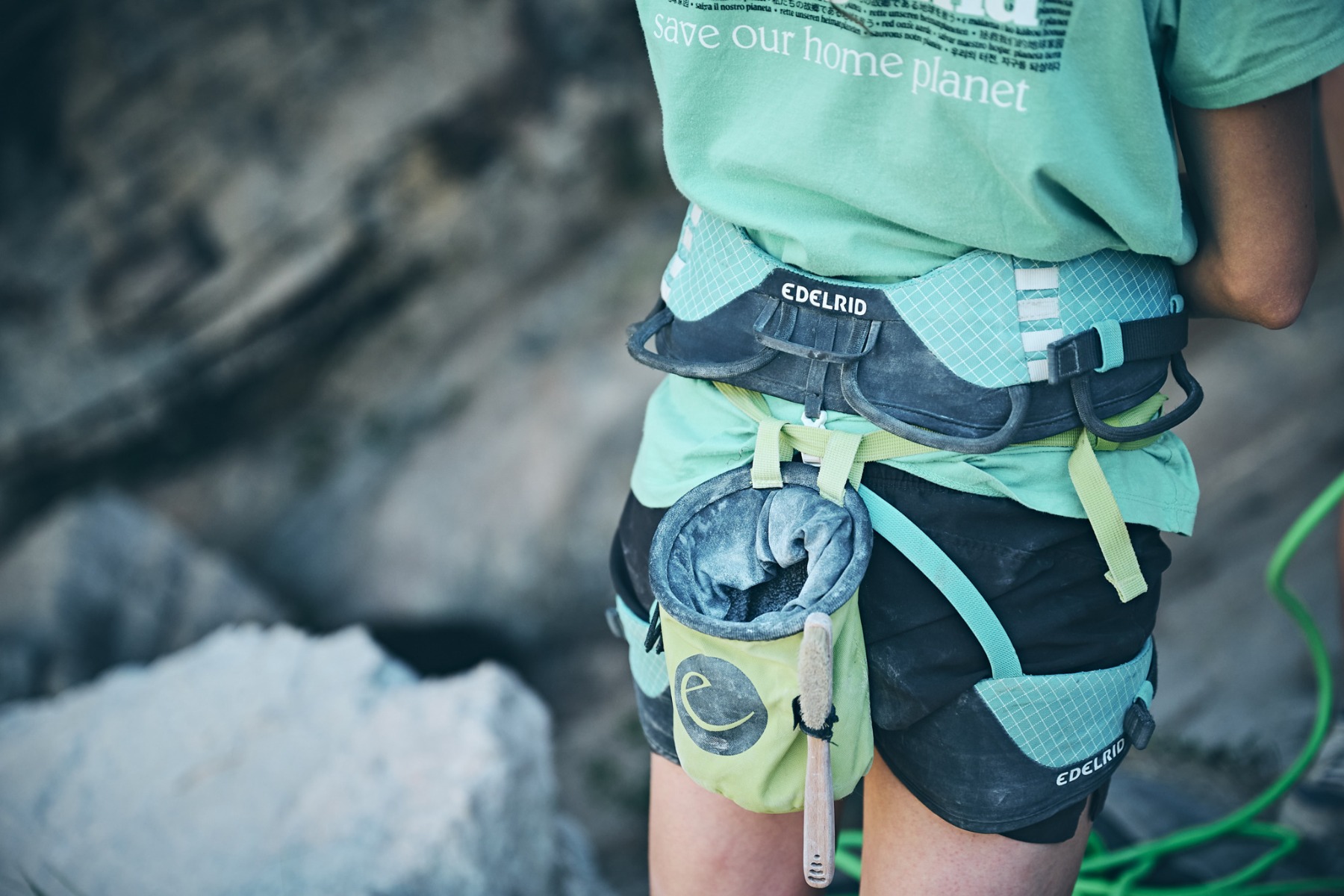
The correct fit of a harness
How to close a harness
Each harness has its own locking system: some have various steps of the central webbing in the safety buckles, others only need to be adjusted by tightening the closures. It’s absolutely essential to read the instructions that come with each model to make sure you wear it properly.
To be sure that we have chosen the harness of the right size, make sure that the waistband rests well on our iliac crest, remaining resting on our hips. The harness must be comfortable and stable without tightening too much; the thighs must stay in the upper part of our legs, as close as possible to us.
Once we have closed the harness, we do a double check of everything, we ask our more experienced friend to do a check on our equipment and we also try to see that it is well stable and snug.
WARNING: This article is for informational purposes only and does not purport to explain exhaustively the correct functioning of the various tools mentioned, so please refer to the respective user manuals. The information contained in this article is simply a guideline: before you start climbing it is important to be followed in the learning of basic maneuvers by qualified experts. Furthermore, the article does not claim to be exhaustive with regard to the correct operation of the equipment shown, so please refer to the user manuals.
Tutte le immagini sono di Edelrid


