
When a climber is faced with buying his first pair of climbing shoes, he is often advised to buy a "stiff" model. This connotation, which at first glance seems to imply nothing comfortable, refers to the different types of soles we can find in the shoes; it is a different matter with the uppers, which can be softer or less comfortable depending on the materials used.
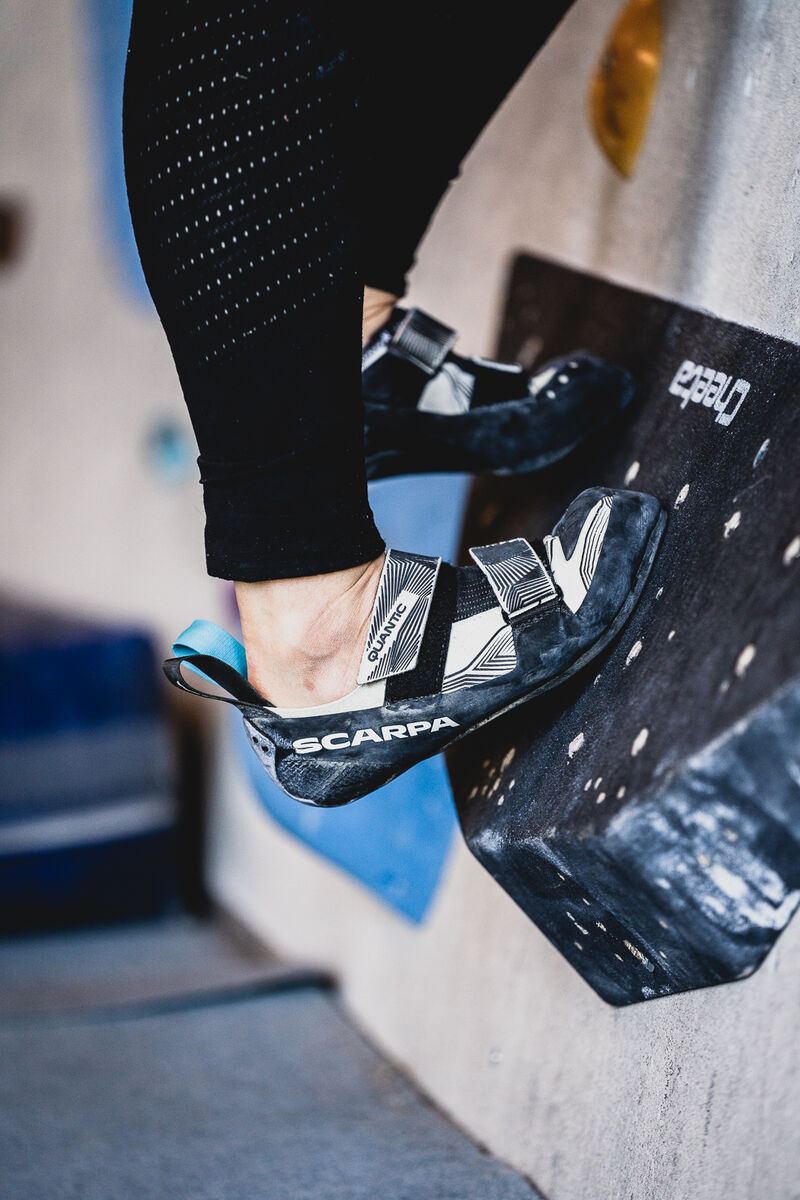
SCARPA Quantic WMN, Hugo Vincent
About the sole stiffness
The sole can be more or less stiff, depending on the thickness, length, and compound used; to find the right compromise for us, we can think that the more support we get from a stiff sole, the less strain we put on our foot and calf muscles. In fact, this is the main reason why a stiff shoe is generally recommended for those who are just starting to climb and have not yet adapted their foot and leg muscles to the "new movements".
The vast majority of stiff climbing shoes adapt the sole structure and a more pronounced rubber thickness to the entire length of the shoe. In this way, we have a balanced and homogeneous support over the entire length of the foot: we can therefore choose this type of shoe even if we are planning to spend many hours on a route, for example, if it is a multi-pitch, because we can wear them for a long time with a certain degree of freshness.
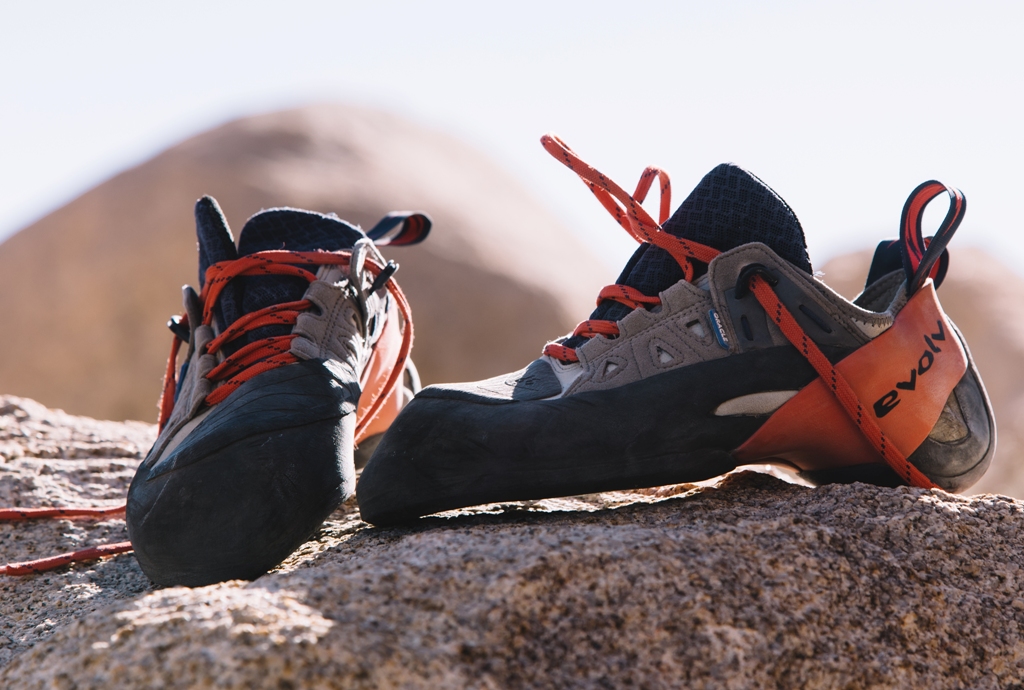
Evolv Oracle
Difference between stiffness and aggressiveness
We have said that the concept of stiffness refers to the type of sole, whereas comfort depends on more factors such as the curvature of the shoes, the straight or asymmetrical shape, and the more or less comfortable upper material. Comfortable climbing shoes also have many features that allow the foot to maintain a more or less natural position in the shoe, i.e. a slightly downward-curved and symmetrical shape.
Performance shoes, on the other hand, will have a more pronounced downward curvature, more pronounced tension, and an asymmetric shape that allows the climber to put all the weight on the front of the shoe. When performance shoes are built with a half sole or other soft sole, we get a model dedicated to experienced climbers looking for maximum flexibility and sensitivity on small footholds, volumes, and overhangs.
The vast majority of rigid climbing shoes adapt the sole structure and a more pronounced rubber thickness to the entire length of the shoe. In this way, we have a balanced and homogeneous support over the entire length of the foot: we can therefore choose this type of shoe even if we are planning to spend many hours on a route, for example, if it is a multi-pitch, because we can wear them for a long time with a certain degree of freshness.

SCARPA Quantic WMN, credits to Hugo Vincent SCARPA
A few examples
La Sportiva's Mythos, for example, is a stiff, comfortable model that has been around for over 30 years and is widely used by multi-pitch climbers: the leather upper makes them comfortable to wear for long days on the wall. Many children's shoes also have this dual characteristic of support and comfort.
Rigid and medium-aggressive are La Sportiva's Finale or even SCARPA's brand new Quantic: in the first case we find a 5 mm Vibram XS Grip sole to give you maximum support on vertical routes, while in the second one, the 3.5 mm Vibram XS Edge, is supported by a Flexan midsole.
On the other hand, many Five Ten and Evolv climbing shoes, SCARPA's Boostic and La Sportiva's Miura are stiff and dedicated to high performance. These shoes give you absolute precision, support, and increased support in extreme vertical walls or on long technical sequences on the feet.
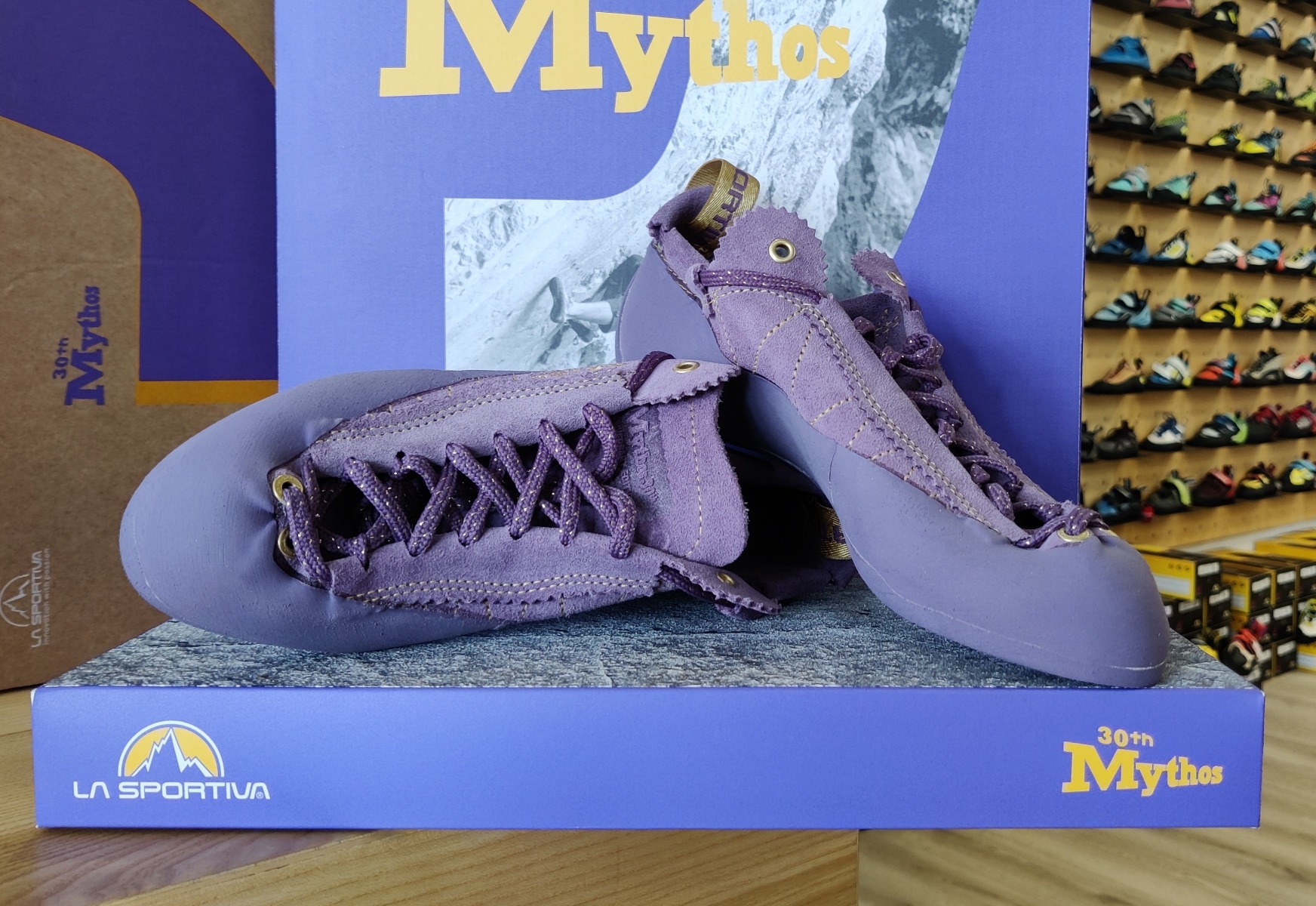
La Sportiva Mythos 30
When to choose stiff climbing shoes
I will go for a rigid model if I have been climbing for a short time and have not yet developed the muscles necessary to hold the shoes for a long time, I tend to hold the shoes on my feet for a long time, such as on multi-pitch routes or in the gym, and if I am looking for support on small holds on vertical walls.


