
Product
27/01/2025
How to choose a backpack for sport climbing
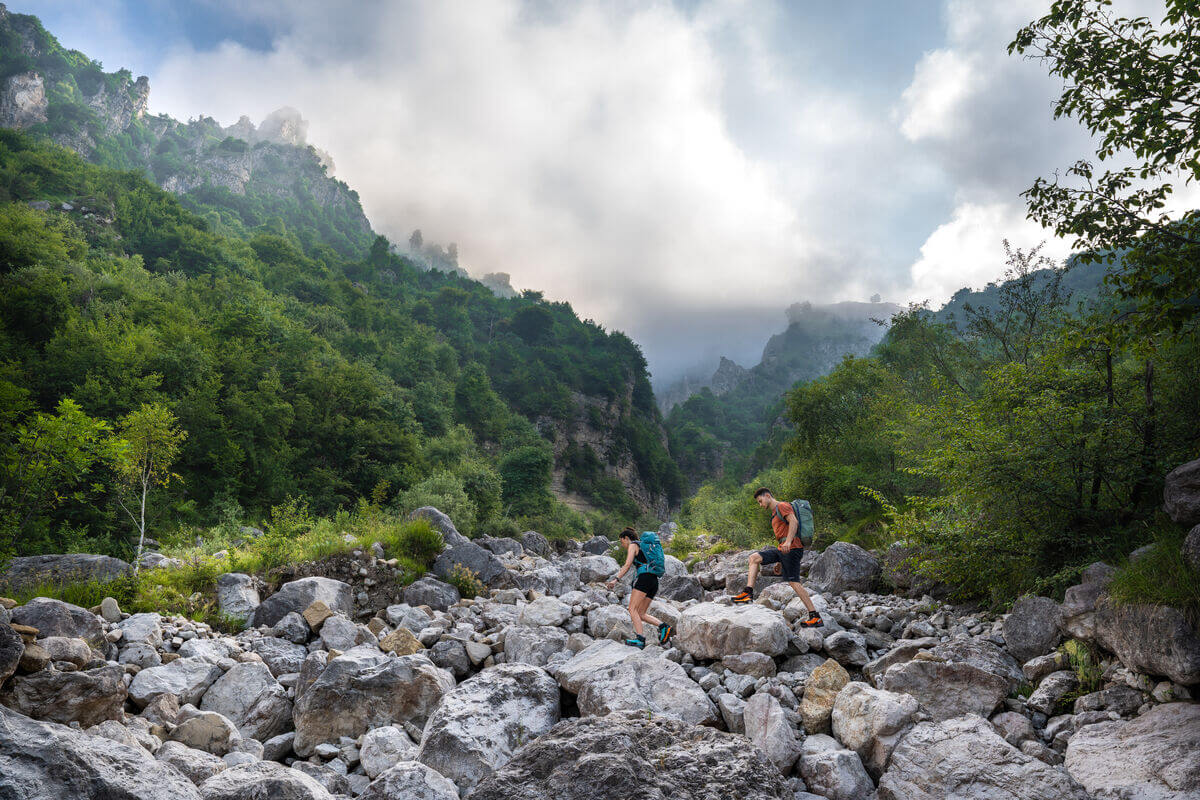
Credits to Camilla MilanI, SCARPA
We all started out carrying our first gear - usually limited to a harness and a few quickdraws - in a normal hiking rucksack. As our climbing experience grew, and with it our equipment, we realised the advantages of having a rucksack designed specifically for this activity.
A sport climbing backpack is created with the idea of organising all the equipment needed for sport climbing in the best possible way, with haul loops for attaching quickdraws without having them scattered all over the bottom of the pack, a system for carrying the rope, and perhaps a compartment for the climbing shoes, separated from the rest of the equipment.
There are so many details that make up a climbing backpack: once you start using it to its full potential, you will find that you cannot do without it!
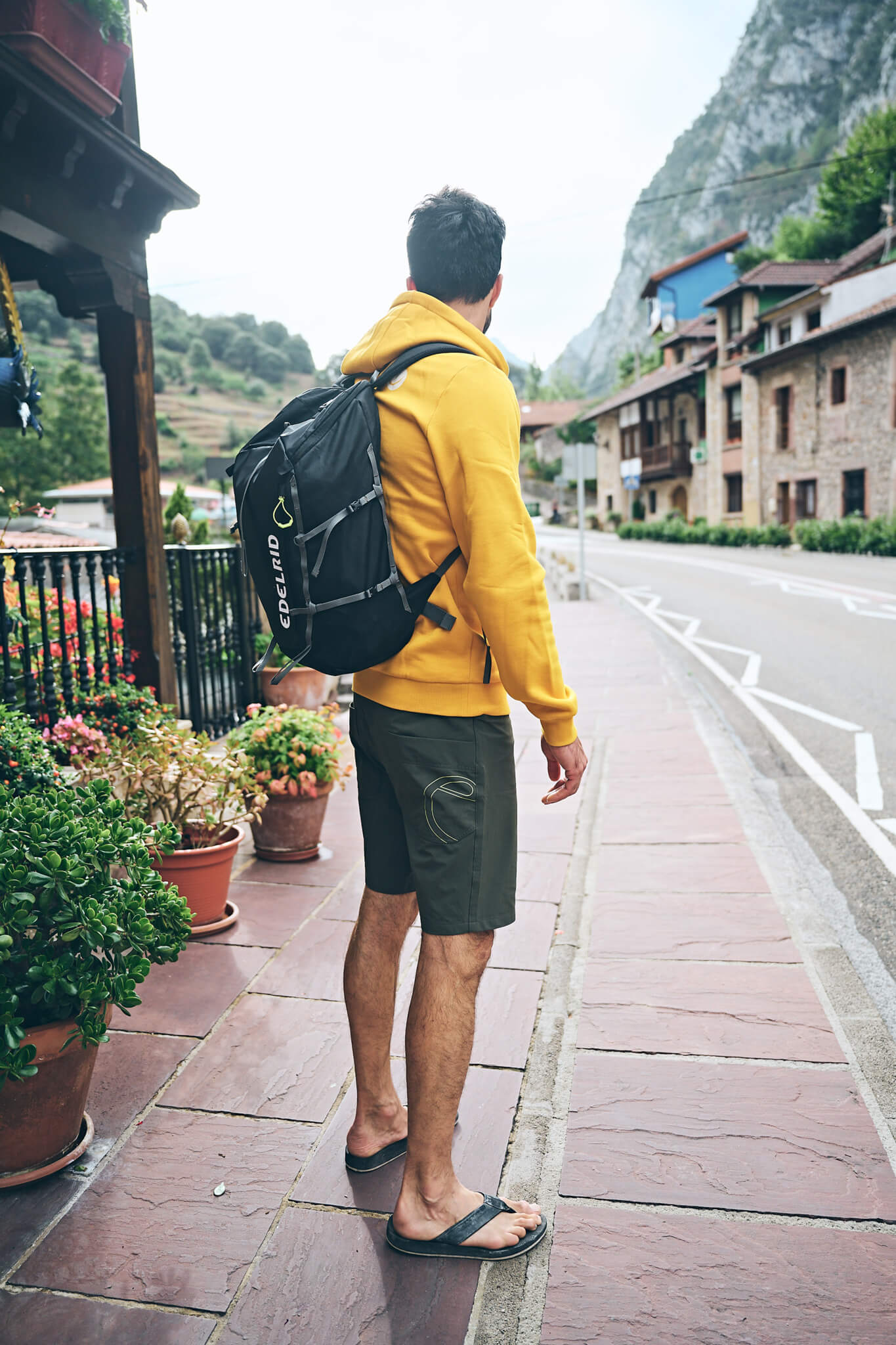
Credits to Christoph Muster, Edelrid
The ideal sizes for a sport climbing backpack
As with hiking and mountaineering backpacks, the capacity of a crag backpack depends on the difficulty of the climb, i.e. the amount of material we want to carry, but also on the time of year, which means more or less layers of clothing and the length of the climb.
In general, however, there is no need to exaggerate the capacity of a climbing pack: the larger ones, between 40 and 55 litres, are usually chosen by those who want to use them in other situations, such as multi-pitch climbing or big wall climbing.
The main difference between a 'small' pack (between 8 and 20 litres) and a 'medium' pack (between 20 and 40 litres) is the way in which the rope is carried: in a small backpack, the rope is carried externally, by means of a webbing or with a rope bag, and is ideal for short approaches. In a medium or large backpack, the rope is carried inside the pack, ideally in a integrated rope carrier, so that all the equipment is compactly stored. You will be comfortable also in the case of long approaches.
Some crag backpacks comply with the size limits for hand-luggage on flights. This is a breakthrough when you go climbing and want to have your equipment with you at all times, without the risk of it getting lost in your checked luggage.
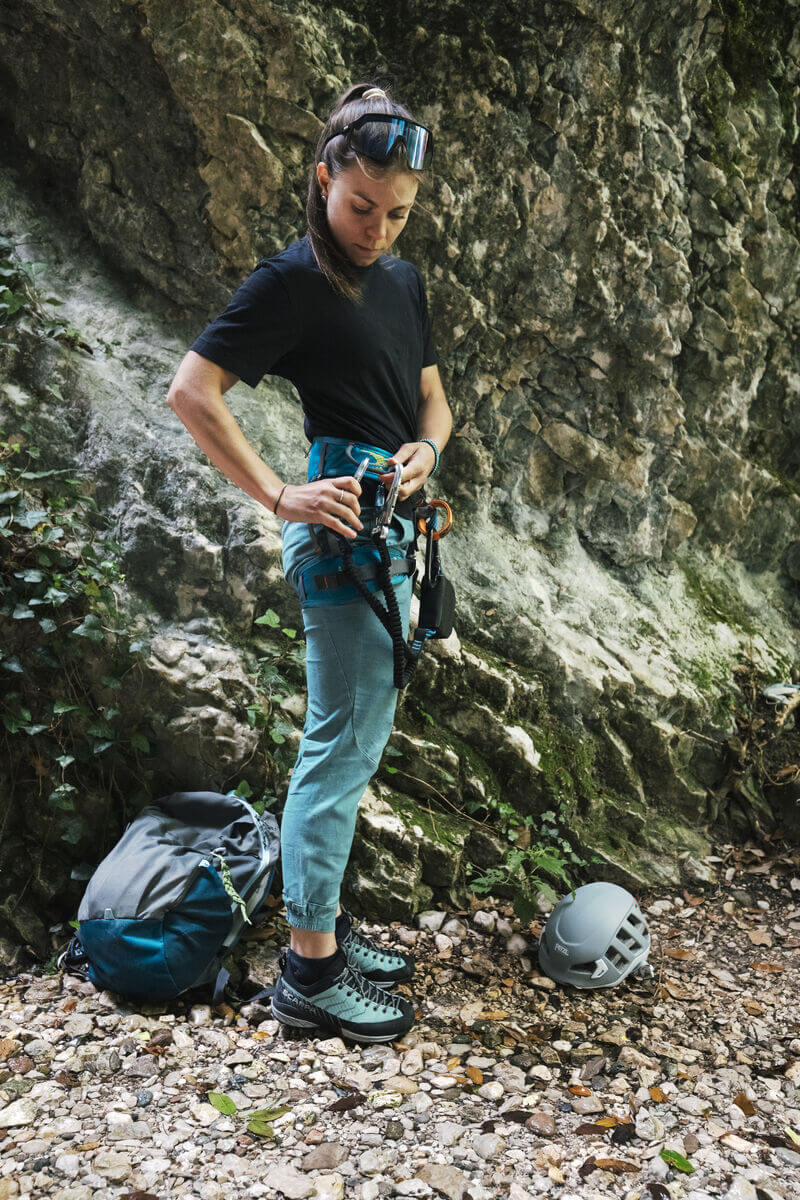
Credits to Roberto Pellegrin, SCARPA
Organisation of equipment: from quickdraws to helmet at hand
The arrangement of equipment inside the pack is, as we have said, crucial and makes the main difference to other backpacks. In addition to the possibility of having a compartment for ropes or shoes and being equipped with loops for quickdraws, carabiners and belay devices, most crag backpacks have a slot for a helmet, an essential element of our equipment.
The different 'strategic' choices of rock climbing backpacks are also matched by the type of opening: as with other backpacks, we can have a front, back, side or top opening, or a combination of two of these options.
Since we often leave the pack on the ground for most of the day, our priority will not be to have quick and immediate access to our gear, but to have ample and comfortable access to the most unlikely corners where we usually hide the tape or skin file!
The chalk bag: the worry of us all
Carrying a powdered magnesite bag is one of those details you don't think about until you see the uncontrollable damage caused by fine powdered magnesite spilling all over the place. Granted, all our bags have super-secure closures, but there's always the chance that you didn't tighten the strap properly, or some other mishap along the way.
To get around this problem, some backpacks have mesh pockets, even inside the pack, where you can put anything you don't want to be able to walk around in: from snacks to magnesite, from skin kit to duct tape, these pockets can be a real game changer.
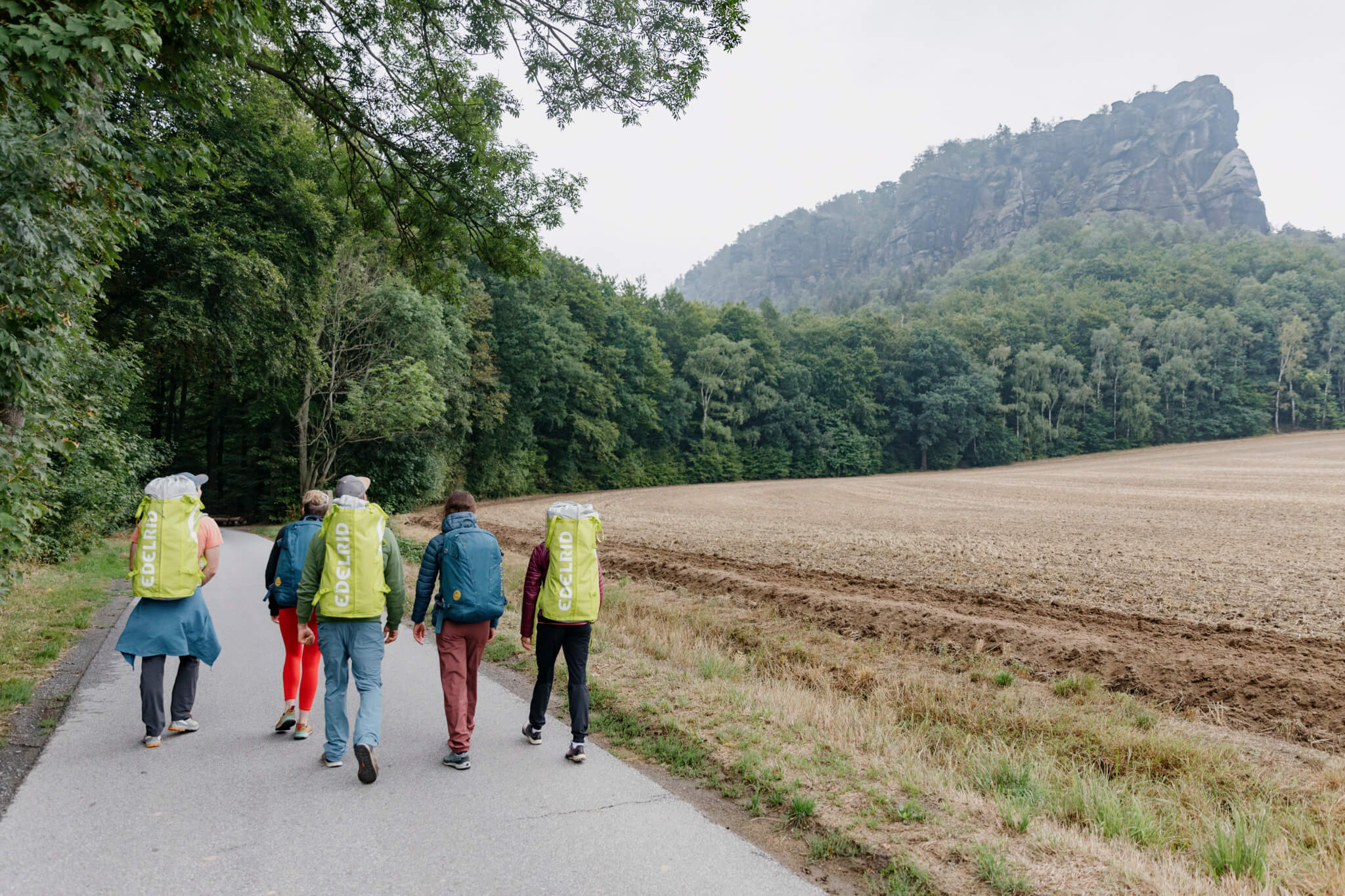
Credits to Martin Poetter, Edelrid
Rigid or sem-irigid?
Within the ‘functionality’ package of backpacks, we find the rigidity factor: rigidly constructed backpacks allow you to fill them up very quickly, retaining their shape and offering great stability, even during the approach walk. Beyond our personal preference for one model rather than another, we may choose this option if we plan to use it a lot in environments with a lot of dirt or sand, where it is very likely to get dirty both on the outside and on the inside if we place it on the ground.
On the contrary, if we climb mainly in rocky environments, where we need the backpack to adapt to the shape of the base - not exactly flat - from which the routes start, it could be an advantage to have a backpack with a semi-rigid structure.
And now would you like to discover all the crag backpacks available on Oliunìd? Come and have a look at our catalogue!


