
Climbing helmets are part of the PPE used for safety in any vertical context: from Via Ferrata to alpine climbing, from sport climbing to light mountaineering, they should be part of every climber's kit.
However, their use in climbing is often considered uncomfortable and impractical, and although their use has become more common over the years, especially among beginners, we are used to seeing more climbers without helmets than with them.
The level of experience should not be one of the factors that lead us to decide if and when to wear it: rather, we could consider as "less risky" a crag with very compact rock and overhanging structures, where the chance of hitting the rock in the event of a fall is reduced.
The role of the helmet is to protect us against accidental falls of stones from above - while we climb as well as while we make sure - and to absorb part of the shock when, falling, we hit the rock.
With increasingly lightweight and breathable materials and foams, there is no excuse not to wear one!
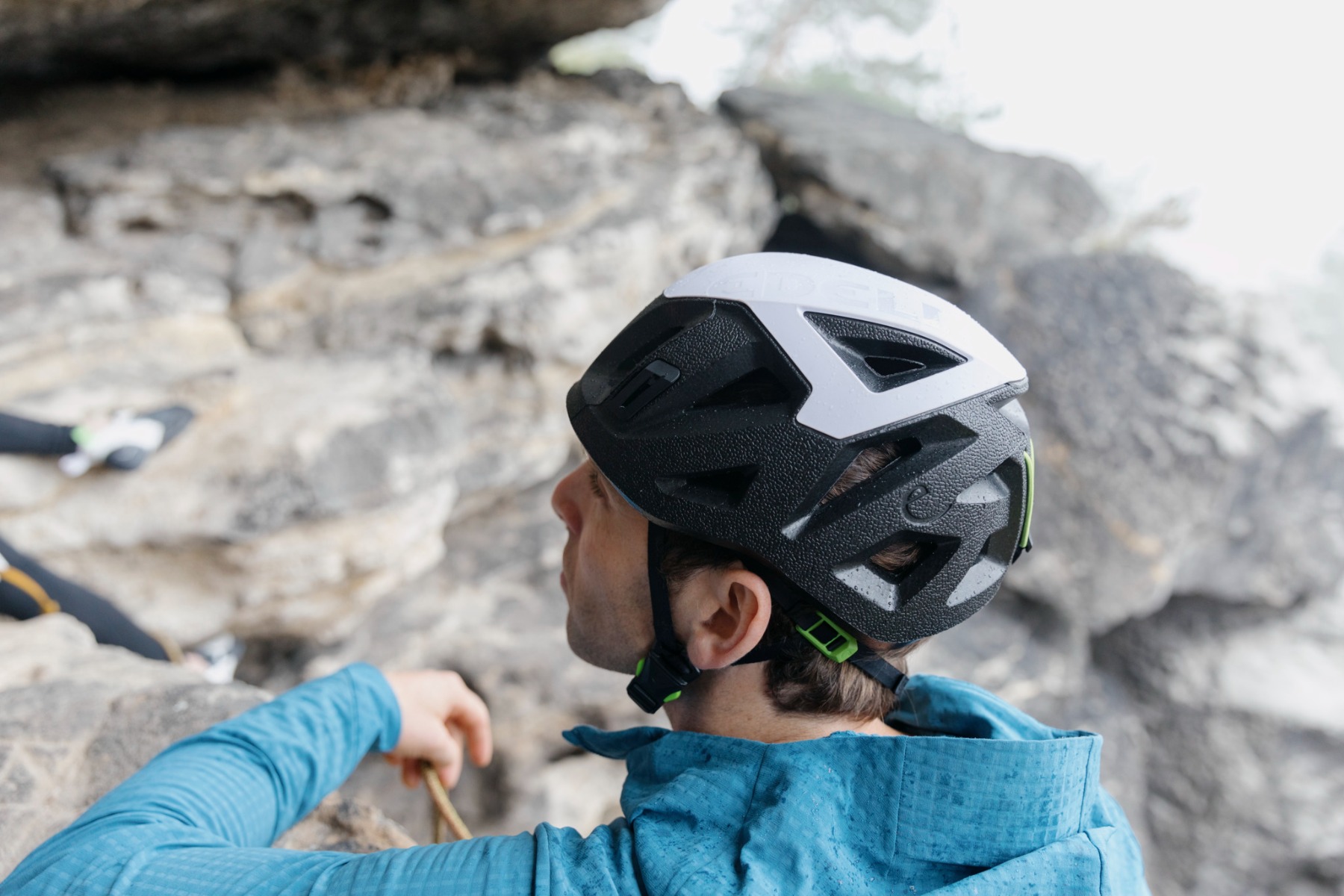
Lightness and comfort at the base of the helmets by Edelrid. Photo by Martin Poetter
Hybrid vs hardshell helmets
The first big difference in choosing a helmet is between hardshell and hybrid models. The latter are the lightest of all, thanks to their construction in expanded polyester covered by a very light rigid outer shell, often made of polycarbonate. In the event of impact, the energy is distributed by the polycarbonate coating and then absorbed by the foam’s ability to expand. Many hybrid models are made with a plastic insert that covers the top of the helmet: in this case, the role of the hard shell is more of foam protection than support in managing the forces generated by shocks. The "extreme" model of foam helmets is Petzl Sirocco, which is a monobloc of expanded polypropylene without any shell: so light that you forget about wearing it. Today they represent the majority of helmets available on the market, also thanks to their extraordinary versatility.
Hard helmets correspond to more "traditional" models, made from a very rigid outer shell (usually in thermoplastic resin) that can last for a long time and resist very well to intensive use and abrasion. In addition to the outer shell, they are completed by a system of suspension webbing and an internal foam, which keep the helmet stable on the head. In the event of an impact, the energy is distributed on the suspension webbings by the plastic shell which, absorbing some of the energy, deforms itself. In addition to being very solid, they give yout the possibility to detach the foam part to wash it separately: for this reason, they are often the preferred choice for climbing gyms, adventure parks, and all those realities where you rent this type of equipment. A classic example of this type of helmet is Boreo by Petzl. Hard helmets, on the other hand, are obviously heavier and less breathable, which is determined more by the number of ventilation holes than by the material of the helmet.
In the new models of helmets, the differences between hybrid and rigid is increasingly thin: any hard helmet is also equipped with an internal foam, but in this case the outer shell made of plastic completely wraps the softer inner part.
What we must be more aware of when we buy a helmet is the ability to specifically absorb shocks from above or protect both in the area of the upper shell of the helmet and in the side parts of it.
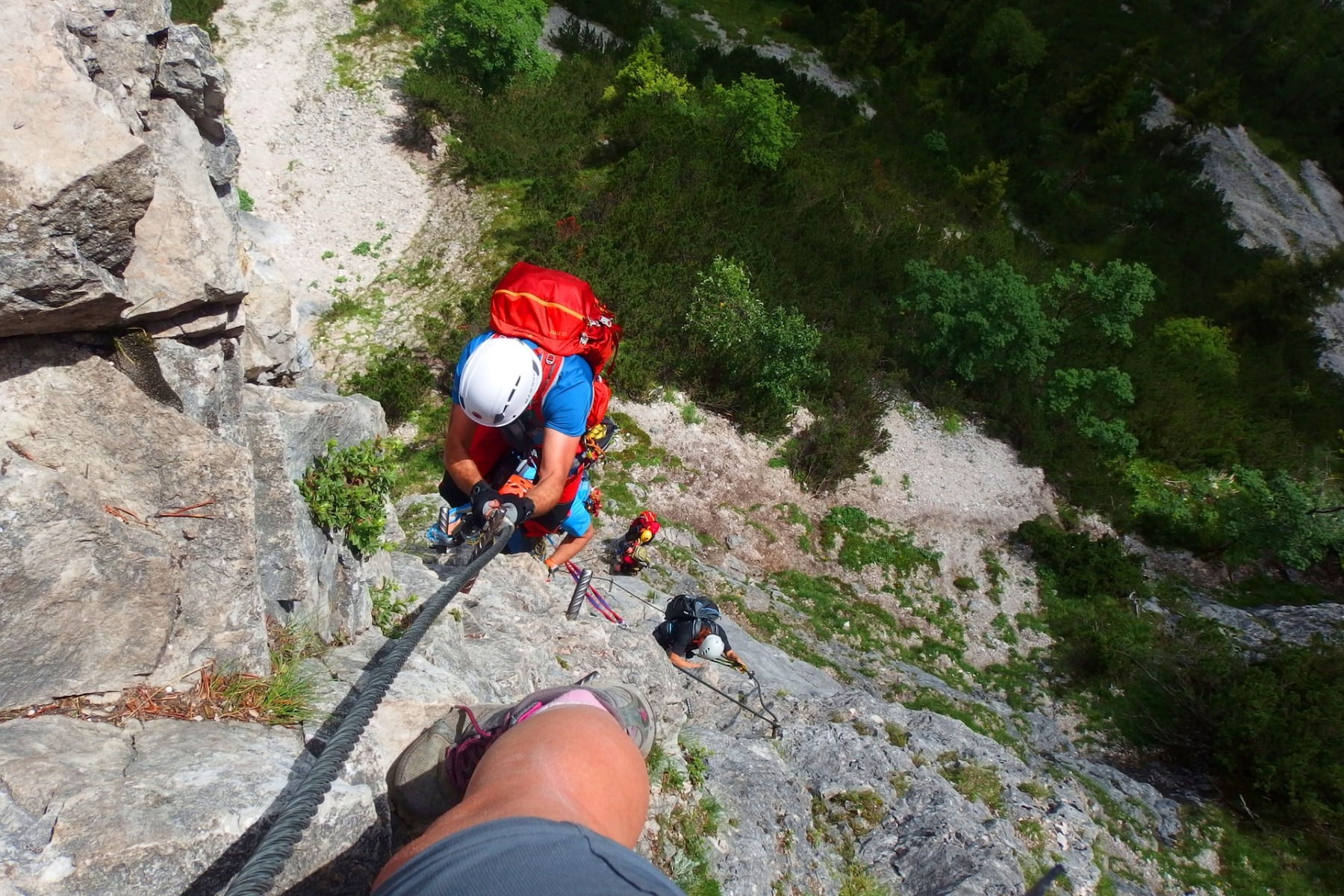
Mammut helmets for the via ferrata: solid and stable fit.
Top and Side Protection
The Top and Side Protection was born in 2019 as a revolution of the Petzl brand: with the initial aim of being used in ski touring helmets, was so successful from the beginning that it has a much wider range of use in helmets specific to different mountain sports.
The first objective of a climbing or mountaineering helmet has always been protection against falling rocks from above: in this role, obviously fundamental, Petzl has integrated the front, side, and rear protection typical of ski helmets, These are used in the event of a skier’s fall. The Top and Side Protection was the first EC-certified approval with impact tests on the upper, lateral, and rear of the helmet as well as the first certification for ski touring helmets.
Today the side and rear protection of helmets take different names but the substance remains the same: in case of a fall of the climber, it is quite common to encounter impacts against the rock that are not only on the top part of the head, but also behind and on the side. Black Diamond, for example, has developed the MIPS technology used to make the Vision helmet: in this case, the inner shell and outer shell are fixed together to create a slip of one part on the other in case of strong side impacts. In this way the inner shell undergoes microdisplacements that absorb part of the energy caused by the impact, protecting the head from possible damage. Reinforced protection helps you to dissipate the energy created by the impact better with an effective absorption by the inner foam, reducing the risk of injury.
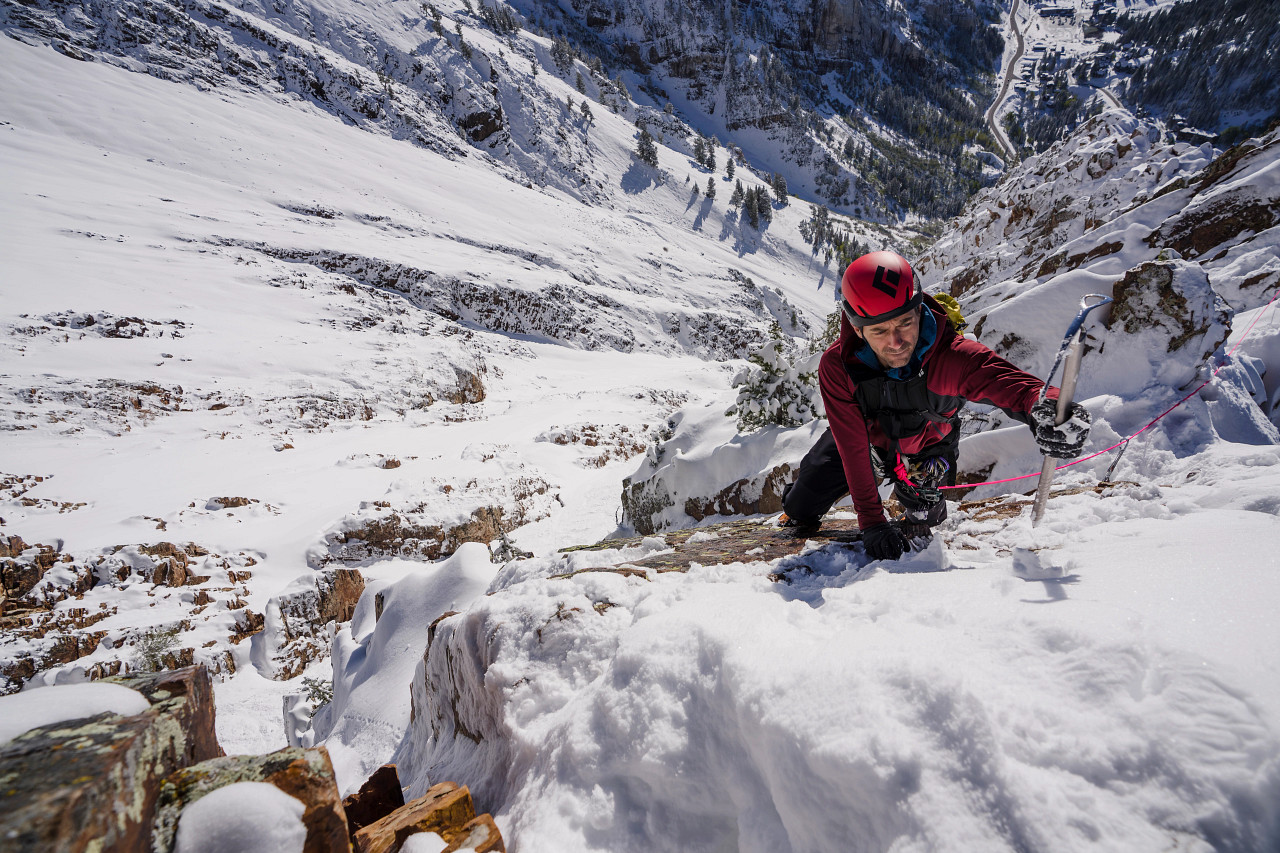
The most cutting-edge technologies for Black Diamond helmets.
The materials used in helmets
Without going into too much technical, it is important to have an idea of the different materials used to make climbing helmets, so you can choose the most specific for your activity with greater competence.
The outer shell: ABS or polycarbonate
ABS
We have already mentioned the outer shell in ABS, often simplified as a "plastic shell": it is a rigid shell, typical of the first hard helmets proposed to climbers and that covers all the inner foam of the helmet, giving a feeling of great solidity and resistance to shocks. Its main role is in fact to give an excellent response to small shocks, without obvious damage either to its structure or to the internal foam, which will then have the task of entering into play in case of major shocks.
The coverage percentage of ABS is increasingly reduced in hybrid models, making helmets more and more technological, with high-performance and super light materials. Helmets with a rigid ABS outer shell are generally heavier than single foam hybrids, cheaper, and longer lasting.
Polycarbonate
The rigid polycarbonate helmet is the most innovative version of the ABS helmet: with different hardnesses, the polycarbonate shell has different capacities to react to shocks, and in models that adopt a particularly thin shell, it may need to be replaced after a fairly severe shock. Compared with ABS, polycarbonate is more durable and strong; because it can make thinner shells with less material than ABS, and the feeling is that it is also lighter and softer. It ranks somewhat as a middle ground between the best qualities of all the helmets available, giving you a helmet that is rigid but light and comfortable, with excellent internal protection that comes from different foam combinations.
The inner foam: EPS or EPP
EPS - Sintered Polystyrene Foam
The inner foam of rigid helmets, or the shell of hybrid helmets, can be made of EPS or EPP. EPS is expanded polystyrene of different densities with an excellent ability to absorb the impact force of shocks: although it is usually necessary to replace the helmet after a very strong impact (which will have obvious consequences on the foam). Cost-wise, it represents a good middle ground between the rigid helmet and the even more high-tech EPP version.
EPP - Expanded polypropylene
A material very similar to EPS, EPP is a foam with a softer structure, capable of absorbing small shocks without obvious damage. Equal to EPS foam, however, it must be replaced immediately in the event of a very large impact: but, again, damage to the foam's structure will be evident upon initial inspection, and there will be no doubt that it will end up with us. It is generally a more expensive material but also more comfortable to use; you may be relieved to have to choose between the two types of foam in a great many models that use them both on different areas of the helmet (usually EPP is on the side and back, EPS on the top).
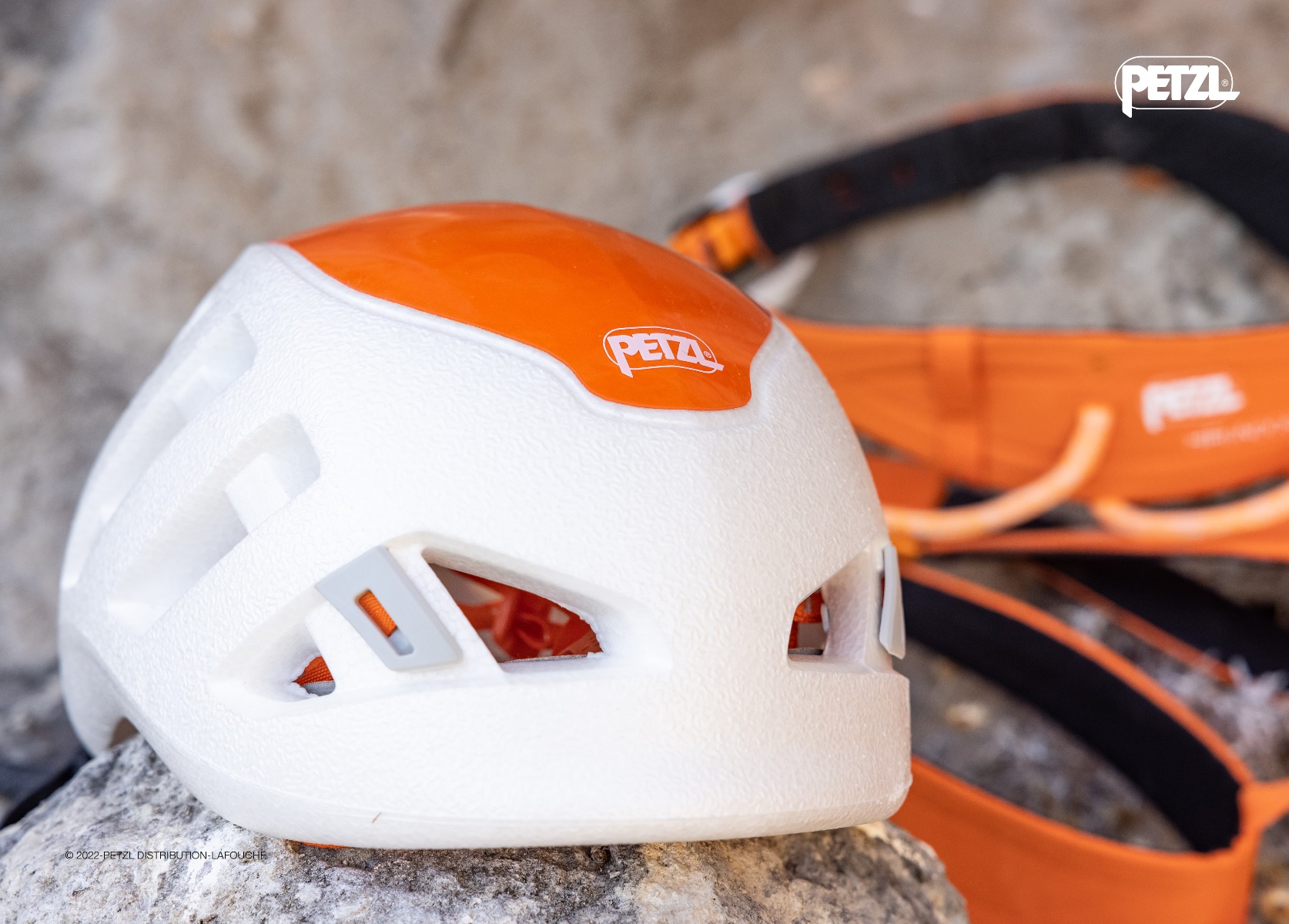
Sirocco by Petzl: a high-end helmet for the best performance
What kind of helmet to use for the different types of climbing?
Via Ferrata and adventure parks
For Via Ferrata and Adventure Parks we can choose a hard helmet that protects us from falling rocks from above and accidental impacts with iron steps or other types of equipment with which Via Ferratas are equipped. The hard helmet also has removable and washable inner padding after particularly heavy use; to these features, we can then add any holes for ventilation and different lacing adjustments according to our preferences.
Summer mountaineering, sports climbing or trad climbing
In any situation where you will be putting the helmet on your head for several hours, we recommend that you lean toward models that are breathable or are made with many areas of ventilation. Hybrid helmets, already characterized “by nature” by a reduced weight compared to hard helmets, are more pleasant to wear during long days on the wall and in any kind of long duration activity, especially if we exclude particularly winter conditions.
Ice climbing
At the opposite extreme both in terms of climate and need, we find winter activities such as ice climbing for which, rather than good breathability, we will be looking for the best possible protection from falling ice fragments and other unstable materials from above. In this case we will therefore lean toward a rigid helmet, without too many areas of ventilation, and that has an adjustment system, e.g., with a wheel, designed specifically so that it can be adjusted while wearing winter gloves.
Sport climbing
As for sport climbing, the choice becomes simpler and is related more to seasonality than to discipline-specific needs. A lightweight, well-ventilated helmet is generally perfect for covering most situations related to the moderate hazards of crag climbing; if we have the opportunity to try them on before purchase, choose one that is comfortable to use throughout the day so that we can keep it on even while we are doing safety, especially if we are at the base of crags where rock and friable material have been reported to fall from above.
Ski mountaneering
The world of ski mountaineering responds to requirements and standards set by the ISMF: EN 12492 for mountaineering (the same one we use for sport climbing) and EN1077/B for alpine skiing, which is more specific to lateral head impacts that can occur as a result of a fall. All ski mountaineering helmets that are designed, for example, for competitions comply with this dual certification, ensuring a high standard of safety despite their incredible light weight. However, the dual certification is only mandatory in competition settings; some models of ski mountaineering helmets can be used without EN certification (although the manufacturer will probably have provided its own certifications) in amateur settings.
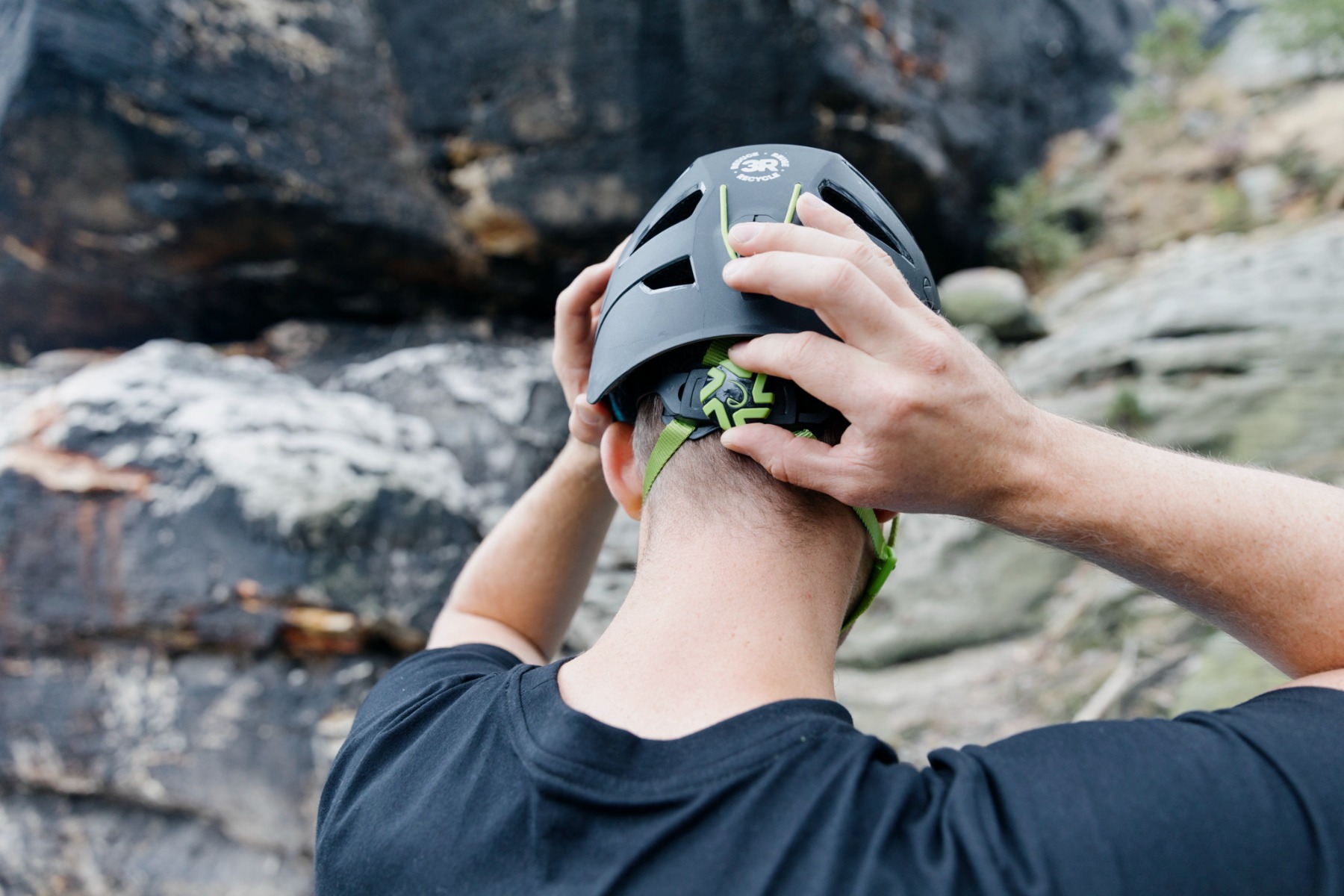
Edelrid Zodiac 3R made of recycled materials: a performance and sustainable helmet
The adjustment system: buckle or wheel
A helmet that protects well and is effective must be stable on our head: once adjusted, we should no longer worry about “adjusting it better” throughout the day. The main difference between a buckle adjustment and a caster adjustment is that the former is placed under the chin or to the side of the fly, and is adjustable only with two hands. The caster, on the other hand, is placed behind the head and can be comfortably spread and tightened with one hand. In many models the under-chin fasteners and caster back adjustment coexist to give you a particularly adaptable model, and can be made with “variations on the theme,” such as ultralight drawstring fit systems to facilitate adjustments and fine-tuning of the fit.
The accessories of helmets
Some features may be considered “accessories,” but they prove to be crucial, for example, when we linger at the crag or in the mountains. Among these is undoubtedly the clip for attaching the headlamp, one of those elements of climbing equipment that really should be part of every good climber's “basic kit.” By now almost all climbing helmets are set up for the use of the headpiece, so the differences are found more in the attachment system. Similarly, we might recognize the countless advantages of a helmet with large ventilation holes if we plan to use it a lot in the summer, or on particularly busy days where we prefer not to have to “suffer the heat.”
Mountaineering helmets, in addition to having special ergonomics and a slot for attaching a headlamp, also have ski-mask attachment systems, as well as removable earmuffs depending on the situation. The “top of the line” helmets can also be made with breathable, removable padding, which you can replace with an anti-sweat foam kit.
What to know before using a helmet
Each helmet comes with an instruction booklet that tells you in detail how to adjust the helmet on your head, making sure the fit is optimal, and that explains all the specifications of the model you have chosen. Don't forget to keep it so that you can refer to it several times over the years, so that you always have accurate directions on its care and maintenance as well.
Cover image: © 2020 PETZL DISTRIBUTION-Mathis DUMAS, Sources: Edelerid Knowledge Base, Guide Dolomiti, Petzl


