
Hardshells, softshells, waterproof membranes, windproof jackets, and ponchos: what should we equip ourselves with to face the typical mountain trips in spring and autumn with confidence?
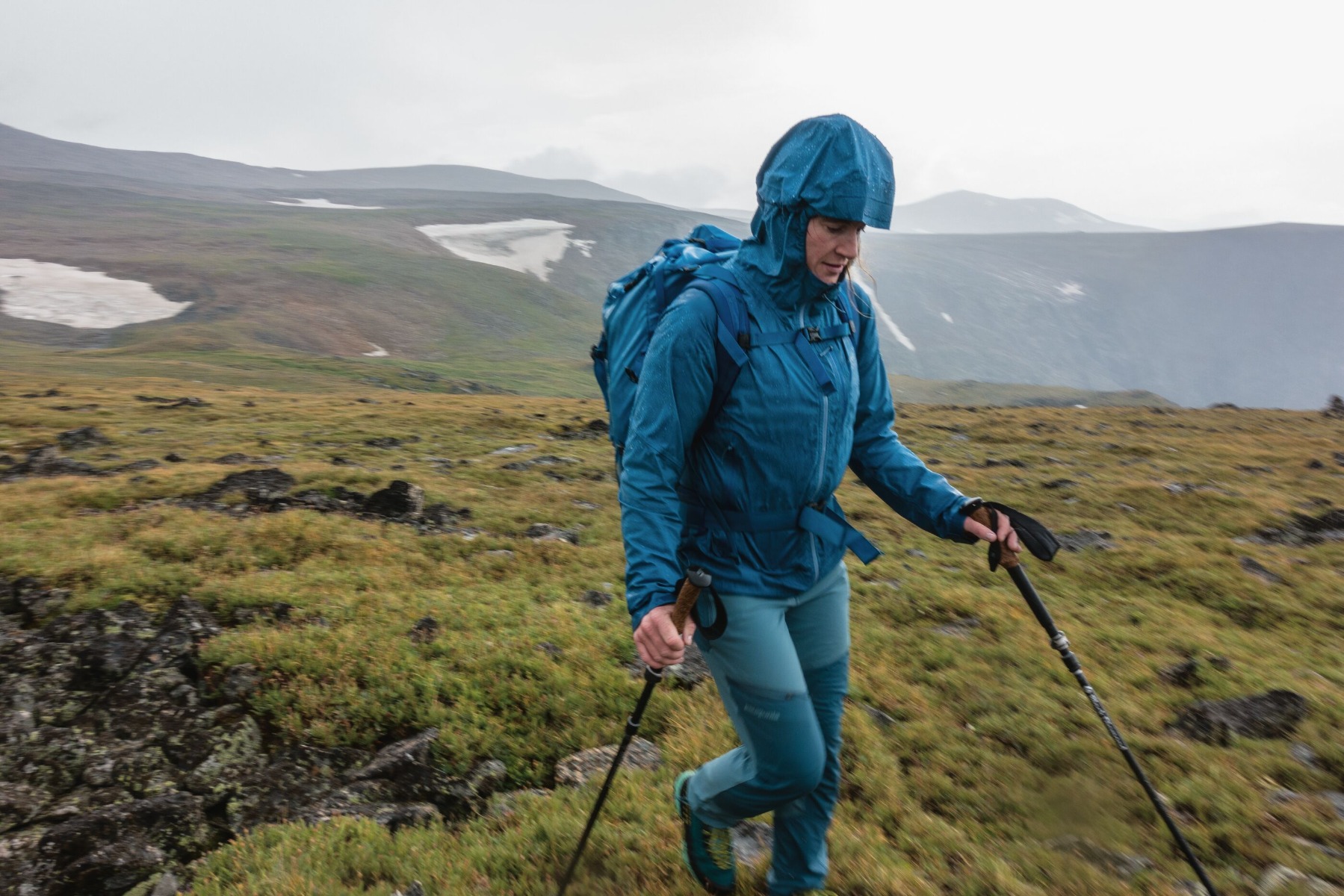
Rhiannon Williams in the backland of Montana, photo by ©Drew Smith, Patagonia
Shells: protection and lightness
When we talk about shells, we are referring to the outermost layer of our clothing, the primary function of which is to protect us from the elements and keep us warm and dry at all times. What may seem like a mere contingency, such as getting caught in a thunderstorm and - if all goes well - ending our trek in the rain, is actually a safety factor. The risk of hypothermia is very real when we are in an alpine environment with sudden changes in the weather, even in summer.
Having made this clarification, let's return to the characteristics of shells: these are jackets made with a waterproof or water-repellent membrane, which has the function of managing both incoming moisture, such as rain, and outgoing moisture, such as perspiration. The knitted construction of these fabrics, with internal microcells that are funnel-shaped and infinitesimally smaller than a drop of water, ensures that water from the outside encounters a barrier and, at the same time, that water vapor droplets from our sweat can channel their way out to the outside. Shells can be of two types: softshells or hardshells.
How impermeable is a shell?
When we talk about waterproofness, we refer to a minimum resistance of 800 ml per cm². In reality, although this is a standard value for a fabric to be declared waterproof, hiking and trekking shells and jackets are tested at much higher water column pressures, at least from 10000 ml upwards. Having clarified this, it is important to note that softshells are water-repellent shells, while hardshells are shells with a waterproof membrane. We will see the differences later.

SCARPA athlete Daniel Jung with technical equipment for Trail Running. Credits to Patrick Schwienbacher
The different types of shells
The poncho or K-way: emergency protection for sudden rain
Before we delve into the world of shells, however, let's take a quick look at the Poncho, an emergency waterproof protection that, thanks to its width, also serves the function of a backpack cover. The cape is made of a single piece of PVC or nylon material, is lightweight to carry, and extremely compressible: adding it to your backpack will not be a problem. This type of cover offers protection only in rainy weather, while its qualities both thermally and as a windbreaker are not optimal. We can consider it as an element of an “emergency kit” for an unexpected and unscheduled change of weather.
The softshell shell: DWR water repellent treatment
As the name suggests, softshells are made with a water-repellent treatment, so they are good for protecting us from light or not too long rain. On the other hand, softshells are much more breathable than hardshells, making them suitable for more aerobic activities. Softshells are ideal for winter activities such as ski mountaineering, for example: not only do they adapt better to the wearer's needs, who may be sweating all day, but the soft, stretchy fabrics also allow for greater freedom of movement. Compared to hardshells, softshells are also generally much warmer, with thermal properties that will make you appreciate them in everyday life.
The hardshell: waterproof jackets in two or three layers
Hardshells are jackets with a waterproof membrane and can be made up of two or three layers: the former have only an outer layer and a waterproof membrane, while three-layer hardshells also have an inner layer. Hardshells can protect us from the heaviest rain and snow, but their main function remains that of keeping us dry: if we are considering using them in freezing conditions, we should combine them with a technical down jacket or at least a layer with unquestionable thermal properties. These products are generally intended for mountaineering, where we don't sweat too much because of the cold, or for walking, where we want a waterproof layer that we can use if necessary. As the name suggests, hardshells are stiffer shells that give us less freedom of movement and less breathability, especially in the three-layer version. Two-layer or two-and-a-half-layer garments can form part of a trail runner's or well-equipped hiker's technical clothing kit.
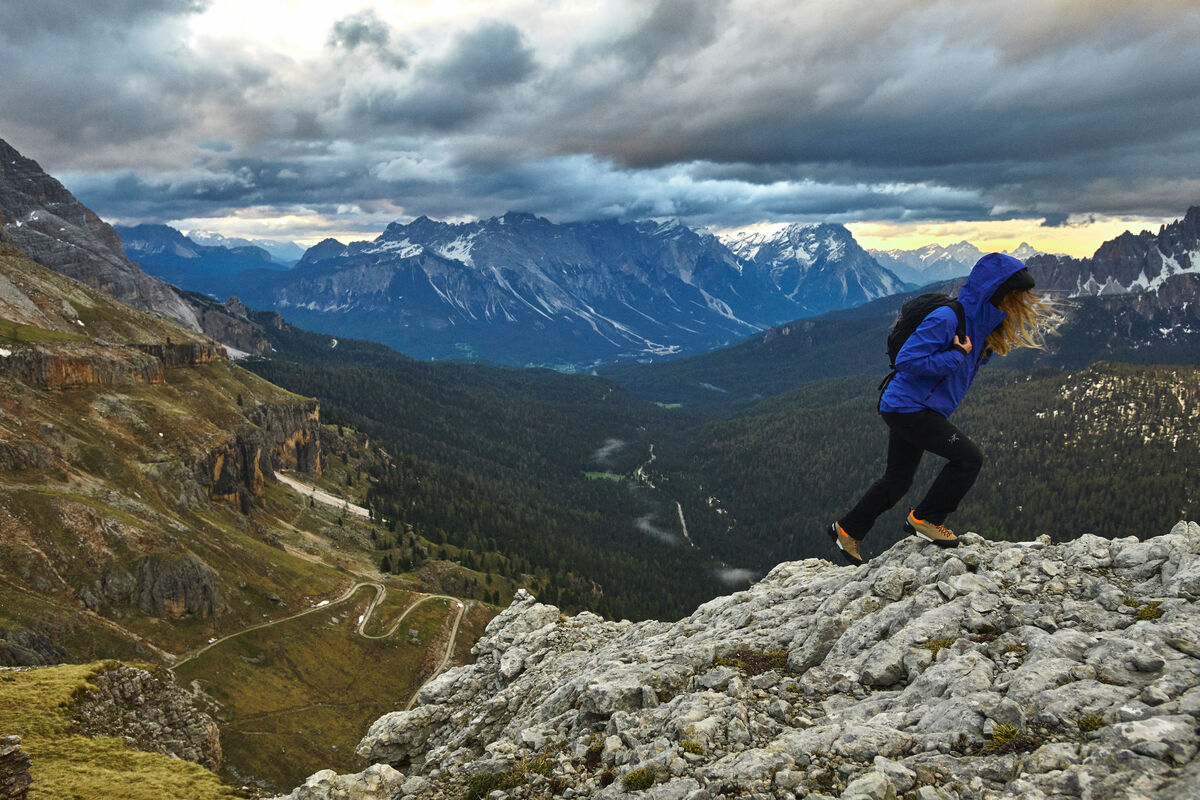
Photo by Paolo Sartori, SCARPA
Gore-Tex: the ultimate waterproof and breathable membrane
When we talk about waterproof membranes, we all immediately think of the highest quality products such as Gore-Tex, an extraordinary material that has always been synonymous with breathability and waterproofing, with a resistance of even 20000 ml per cm². The variants of Gore-Tex are different, but all have similar characteristics and the same guarantee of water resistance, breathability, and durability over time. Compared to water repellent treatments, breathable membranes like Gore-Tex guarantee you excellent performance throughout their lifetime. To contribute even more to the overall waterproofness of each part of the jacket, we can evaluate the finishing of zippers and seams: any heat-sealing or sealing of all the most delicate points of the jacket from which water might seep can guarantee us total insulation from water even in the worst situations.
An amazing combo: Gore-Tex plus DWR treatment
Now that we have broadly known the main materials and their characteristics, however, we should not think that one treatment excludes the other and especially that the presence of a waterproof membrane such as Gore-Tex excludes, for example, the use of DWR technology. These two technologies often coexist to maximize both the waterproofing and breathability effects of the materials, to give you complete insulation, but without running the risk of having a “sauna effect” inside the jacket. In addition, each waterproof membrane (there are different brands) and each treatment exists in different variations: just as Gore-Tex also exists in an “Active” version with improved breathability capabilities, DWR can also have different water resistance coefficients. Being aware of these nuances for each material can help us effectively skim the very wide range of shells and jackets to find the one best suited for our activity!
Cover image: ©Lars Schneider, Patagonia


