
Mobile locking handles, installed on a fixed rope, allow the climber to ascend a rope in conjunction with a etrier for the feet and a belaying device like the GriGri. Widely used in other sports such as caving and canyoning, handle ascenders are also part of the kit of climbers who practice artificial climbing or who want to ascend a rope to take photos from above or, in some cases, to clean routes or to bolt. They are tools used with a certain frequency even in the context of work at height.
How to use locking handles
Locking handles should mostly be used with static ropes with a very high sheath percentage; the reason is that the same system that allows the upwards-sliding of the rope, can cause clearly visible damage to the rope when it is in "blocking modality". The handle is in fact equipped with a cam studded with teeth that provides a firm grip on the rope: if we use it a lot, we can begin to notice the first surface fraying on the sheath of the rope. The descent on the ascenders is however carried out only in speleological contexts and work at height using two handles in sequence in the opposite direction to the ascent.
In addition to obvious safety reasons, it is not advisable to use the handles on dynamic ropes also because of the elongation factor of the rope, which makes it problematic for a quick and smooth ascent.
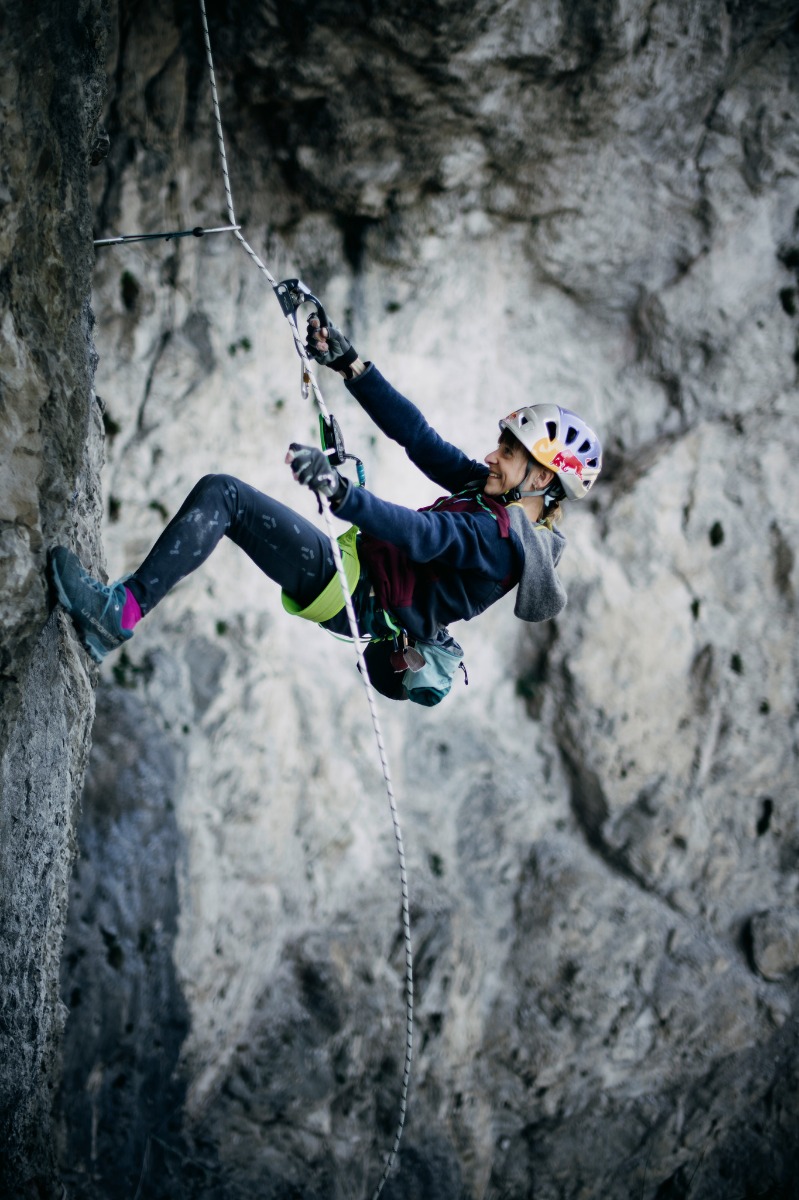
Angela Eiter, Edelrid
The characteristics of the handles
The bottom hole of the handle always houses a carabiner to which we attach both the semistatic cord (or a longe or self-belay cord) and the pedal. If the hole is wide it can also accommodate two carabiners (one for the positioning lanyard, one for the etrier). In the upper part, we find the cam and an opening block that we can "close" with a screw-lock carabiner in order to avoid accidental opening; some models have in addition a second lever integrated in the body of the cam, to avoid remaining accidentally hooked. In the handle we have ergonomic rubber inserts, suitable for right or left hand.
The latest models offer more and more innovative pulleys for the ascent that, in addition to having remarkable effectiveness in the traction phase, exploit the grooves to automatically remove ground grains, mud, or dirt so that it always works best and prolongs the longevity of the handle itself.
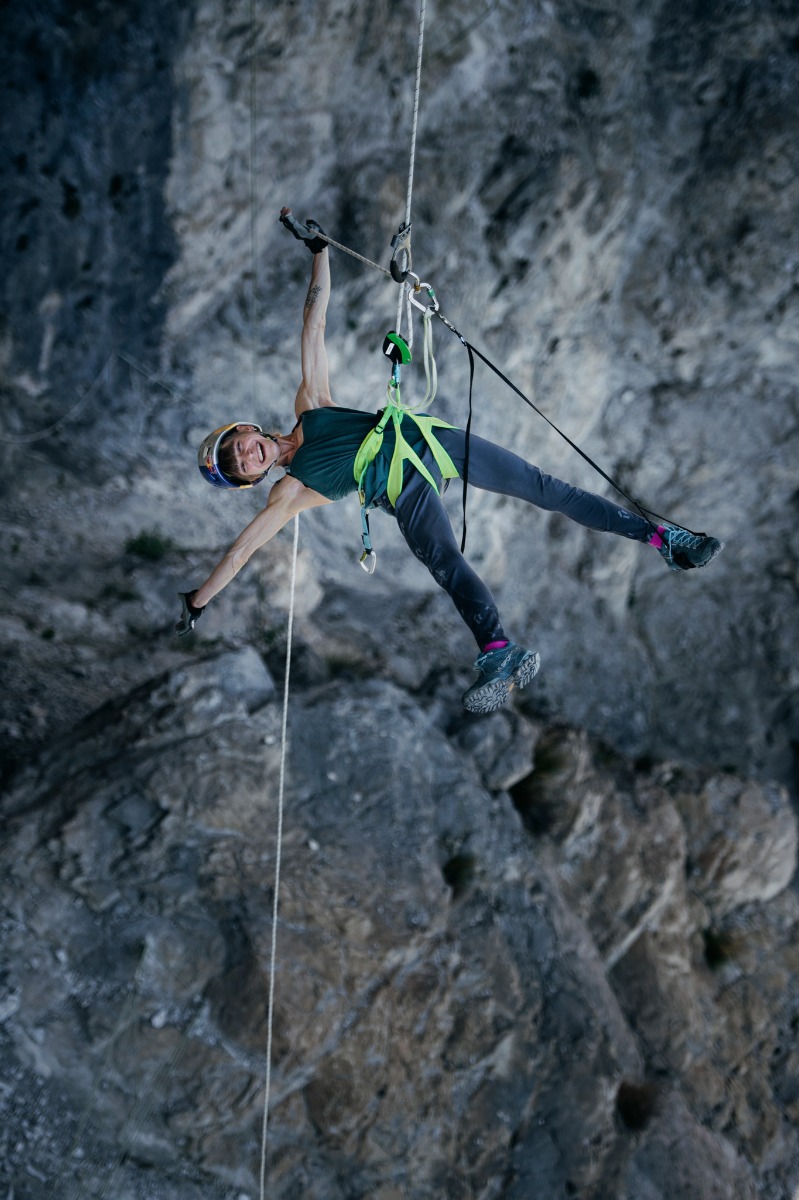
Angela Eiter, Edelrid
In most situations, using two handles, one for each hand is usually recommended (Petzl). Self-locking devices are used with assisted braking belaying devices, such as GriGri, or a chest ascender for more typical caving ascents. We are waiting for you on the page dedicated to ascenders to look at the available models!
Fonti: Sicurezza in Montagna, Petzl, SREGear.com


